War with Iran, oil above $90, a 92,000-job loss, and the software rally that no one expected
Published: March 8, 2026 | Red Bank, NJ
TL;DR — Weekly market summary
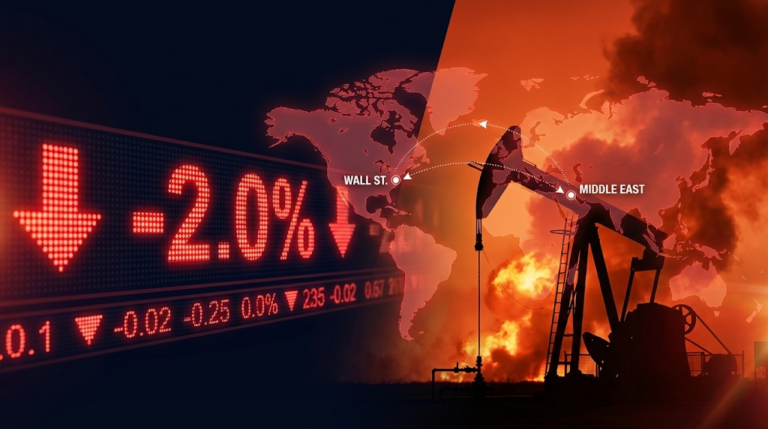
- The S&P 500 closed at 6,740.02 on March 6, falling 2.0% for the week and reaching its lowest close of 2026 after U.S.-Israeli strikes on Iran triggered a global selloff [7] [12].
- WTI crude oil surged to $90.90 per barrel, its strongest weekly gain since the early pandemic in 2020, after Iran’s Revolutionary Guards declared the Strait of Hormuz closed [9] [11].
- The U.S. economy lost 92,000 jobs in February, the third payroll contraction in five months, driven partly by a Kaiser Permanente strike that removed 30,000+ healthcare workers from the count [1] [2].
- ISM Services PMI surged to 56.1, the highest reading since July 2022, with all 10 sub-indices in expansion for the first time since March 2021 [4] [18].
- The IGV Software ETF posted its best week since April 2025, rising roughly 7.9%, while semiconductors (SMH) fell about 6.4% on export control fears [9].
- The Atlanta Fed’s GDPNow tracker fell from 3.0% to 2.1% between March 2 and March 6, the sharpest intra-week decline in over a year [6].
How did the major stock indexes perform the week of March 7, 2026?
The S&P 500 closed Friday, March 6, at 6,740.02, down 2.0% for the week and approximately 1.5% below its 2025 year-end level [7] [12]. The Dow Jones Industrial Average fell 3.0% to 47,501.55, its worst weekly performance since April 2025 [8] [9]. The Nasdaq Composite dropped 1.6%, while the Russell 2000 lost 2.3% [8]. The VIX spiked to 29.49, up more than 24% on Friday alone [8].
A gap opened between the equal-weight and cap-weight versions of the S&P 500. The S&P 500 Equal Weight ETF (RSP) held roughly 1% higher year-to-date, while the cap-weighted index sat about 1.5% lower. That spread confirms what market breadth data has signaled all year: the average stock is outperforming the index suggests, and mega-cap growth names continue to drag the headline number.
Tuesday was the worst single session. The Dow fell more than 1,200 points intraday before partially recovering by the close [9]. The damage was global. South Korea’s Kospi tumbled more than 7%, Japan’s Nikkei dropped 3%, and Dubai’s benchmark fell nearly 5% when exchanges reopened on Wednesday [10].
| Index / ETF | Ticker | Friday Close | Weekly Change | YTD Change |
|---|---|---|---|---|
| S&P 500 | SPY | 6,740.02 | -2.0% | ~-1.5% |
| Dow Jones | DIA | 47,501.55 | -3.0% | ~-0.5% |
| Nasdaq Composite | QQQ | 22,387.68 | -1.6% | ~-2.0% |
| Russell 2000 | IWM | 2,525.30 | -2.3% | ~-3.5% |
| S&P 500 Equal Wt | RSP | — | ~-1.0% | ~+1.0% |
| CBOE Volatility | VIX | 29.49 | +24.2% | — |
Sources: FRED, Yahoo Finance, Investing.com [7] [8] [12].
Which sectors won and lost during the week of the Iranian oil shock?
Sector performance reflected a mean-reversion trade: 2026’s year-to-date laggards became relative leaders, and the prior leaders gave back ground [9]. Energy (XLE) was the only sector to post positive returns, rising roughly 5.5% as crude oil prices surged. Oil services, tracked by OIH, gained nearly 7% and sat more than 31% higher year-to-date.
Materials (XLB) led the decliners, shedding about 7% for the week. Consumer staples, one of the strongest sectors entering the week, dropped roughly 5%. Airlines fell nearly 11% as jet fuel costs spiked. Gold miners lost over 12% even though gold itself finished near $5,159 per ounce. That disconnect was driven by forced liquidation and margin calls, not a change in the fundamental gold thesis.
The software rally inside tech
The IGV Software ETF gained approximately 7.9% for the week, its strongest performance since April 2025 [9]. Months of indiscriminate selling in SaaS and enterprise software names attracted dip-buyers. Investors began recognizing that AI-driven enterprise software companies could be the winners of this cycle rather than the casualties. Semiconductors moved in the opposite direction. The SMH ETF dropped about 6.4% on export control fears and geopolitical risk.
| Sector / ETF | Ticker | Weekly Change | YTD Change |
|---|---|---|---|
| Energy | XLE | +5.5% | +25%+ |
| Oil Services | OIH | +7.0% | +31%+ |
| Software | IGV | +7.9% | Recovering |
| Materials | XLB | -7.0% | +10% |
| Consumer Staples | XLP | -5.0% | Declined |
| Airlines | JETS | -11.0% | Declined |
| Semiconductors | SMH | -6.4% | Declined |
Source: Yahoo Finance sector data [9].
What did the February 2026 jobs report show?
The Bureau of Labor Statistics reported on March 6 that the U.S. economy lost 92,000 nonfarm payroll jobs in February [1]. Wall Street consensus had expected a gain of 50,000 to 59,000 [2] [15]. The unemployment rate edged up to 4.4% from 4.3% in January. This was the third payroll contraction in five months [2] [16].
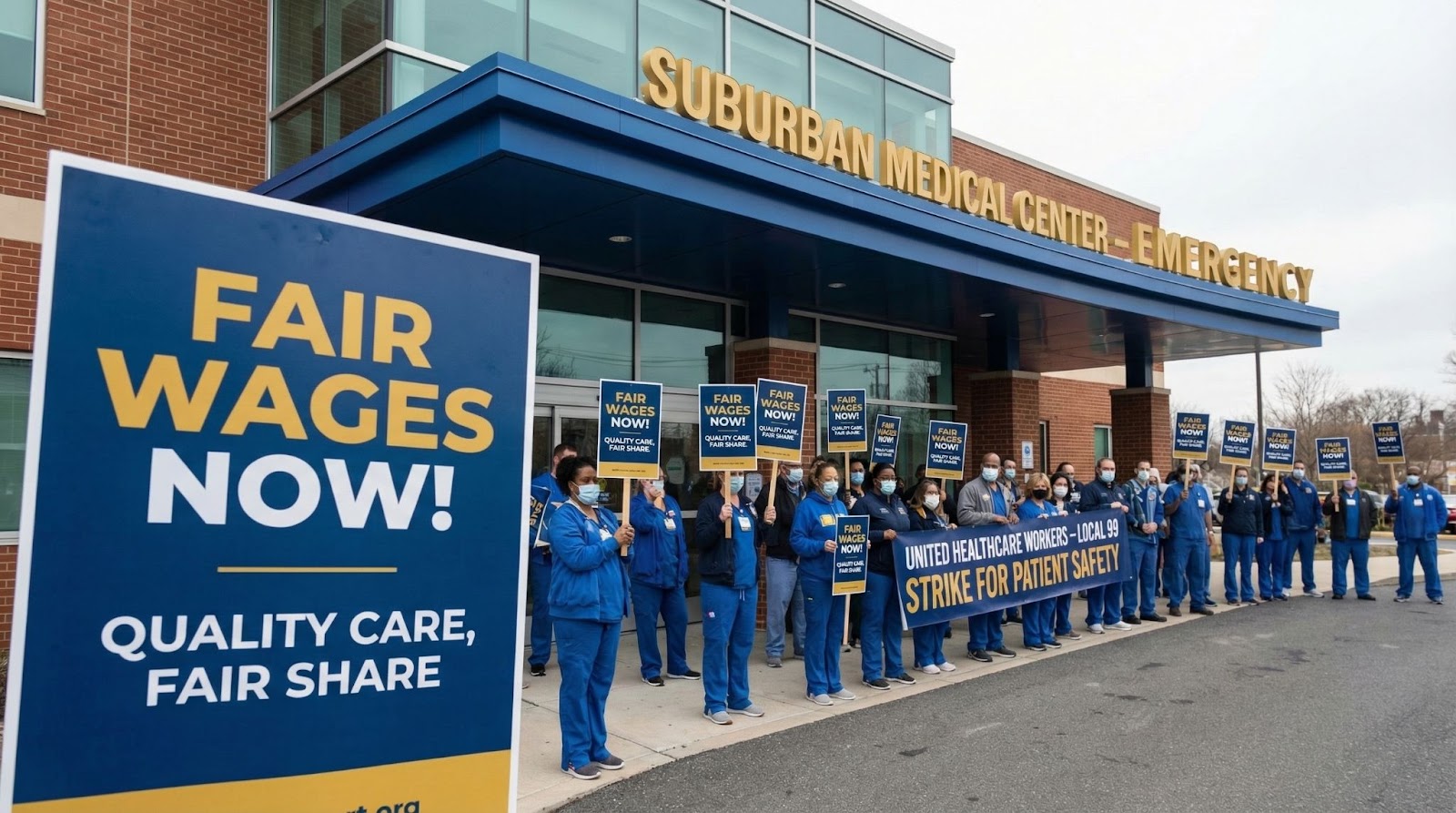
Context matters. A Kaiser Permanente strike removed more than 30,000 healthcare workers in California and Hawaii from the count during the BLS survey week [2] [15]. Healthcare employment fell by 28,000 in February after adding 77,000 in January. Physicians’ offices alone lost 37,000 jobs [1]. The strike has since been resolved, and the healthcare drag is expected to reverse in March.
Federal government payrolls declined by another 10,000, continuing a trend that has eliminated 330,000 federal jobs—11% of the total federal workforce—since the October 2024 peak [2] [17]. December payrolls were revised sharply lower, from +48,000 to -17,000 [1]. Combined revisions for December and January wiped out 69,000 jobs that had previously been reported as gains [1] [16].
| Metric | February 2026 | Prior / Consensus |
|---|---|---|
| Nonfarm Payrolls | -92,000 | Consensus: +50K to +59K |
| Unemployment Rate | 4.4% | Prior: 4.3% |
| Healthcare Jobs | -28,000 | Prior month: +77,000 |
| Federal Govt Jobs | -10,000 | 330K lost since Oct 2024 |
| December Revision | -17,000 | Was: +48,000 |
| Net Revisions (Dec+Jan) | -69,000 | Eliminated prior gains |
Sources: Bureau of Labor Statistics [1], CNBC [2], Trading Economics [16].
How did the ADP private payrolls compare?
ADP reported on March 4 that private-sector employers added 63,000 jobs in February, beating the Dow Jones consensus estimate of 50,000 [3] [19]. January was revised down to just 11,000 from an initially reported 22,000. The disconnect between the ADP private payroll figure and the BLS headline number reflects the effects of strikes, federal government layoffs, and differences in survey methodology. This gap will keep economists debating through the March Fed meeting.
What did the ISM services and manufacturing data reveal in February 2026?
The ISM Services PMI surged to 56.1 in February, up from 53.8 in January, marking the highest reading since July 2022 [4] [13]. New orders hit 58.6, the strongest reading in 17 months [4]. Business activity reached 59.9, the second-highest print since November 2022 [4]. All 10 reported sub-indices expanded simultaneously for the first time since March 2021 [4] [18] [21].
Manufacturing held at 52.4, the second consecutive month of expansion after nearly three years of contraction [5] [14]. Prices paid in manufacturing surged to 70.5, the highest since June 2022, driven by steel, aluminum, and tariff-related costs [5] [14].
“February’s Services PMI features the third month in a row with all four subindexes in expansion territory. All 10 reported indexes were in expansion territory for the first time since March 2021.”
— Steve Miller, Chair, ISM Services Business Survey Committee
Source: ISM Services PMI press release [4].
| ISM Indicator | February 2026 | January 2026 | Signal |
|---|---|---|---|
| Services PMI | 56.1 | 53.8 | Highest since July 2022 |
| Services New Orders | 58.6 | 53.1 | 17-month high |
| Services Business Activity | 59.9 | 57.4 | 2nd highest since Nov 2022 |
| Manufacturing PMI | 52.4 | 52.6 | 2nd straight expansion |
| Mfg Prices Paid | 70.5 | 59.0 | Highest since June 2022 |
Sources: ISM [4] [5], Advisor Perspectives [21].
What does the data mean for the Federal Reserve in March 2026?
The Fed faces a difficult mix: a service economy expanding at its fastest pace in three-and-a-half years, manufacturing input costs at a four-year high, oil above $90 a barrel, and a labor print distorted by a one-time strike. That combination does not favor rate cuts.
The FOMC meets March 18–19. Markets are pricing no change in the federal funds rate. The 10-year Treasury yield ended the week around 4.11%, reflecting higher inflation expectations rather than economic optimism [9]. The Atlanta Fed’s GDPNow tracker fell from 3.0% to 2.1% between March 2 and March 6 [6]. Fed Governor Christopher Waller noted before the jobs report that a weak employment number could affect policy, making him an outlier among FOMC members pushing for cuts [2].

How did the Iran conflict affect oil prices and global markets?
Joint U.S.-Israeli military strikes over the weekend of March 1–2 killed Iran’s Supreme Leader Ayatollah Ali Khamenei, the most consequential shift in Iranian politics since the 1979 revolution [10]. Iran’s Revolutionary Guards declared the Strait of Hormuz closed. The Strait handles roughly 20 million barrels of oil per day, approximately 20% of global consumption.
Multiple tankers were struck near the waterway, and maritime traffic came to a near standstill [10]. QatarEnergy ceased production after military attacks on its facilities. Saudi Aramco temporarily shut its Ras Tanura refinery following a drone strike.
West Texas Intermediate crude broke above $90 per barrel and posted its strongest weekly gain since the early days of the pandemic in 2020 [9] [11] [20]. Brent settled near $93. Gasoline prices jumped 34 cents per gallon in four days. Diesel futures posted back-to-back sessions of 12% daily gains.
“Gulf oil producers could cease operations within days. That kind of price could collapse the economies of the world.”
— Qatar’s Energy Minister, Financial Times interview
Source: Yahoo Finance / Financial Times [9].
Treasury Secretary Bessent confirmed that a new 15% global tariff is being implemented, layering additional cost pressure onto already strained supply chains [9]. The combination of an oil shock, tariff escalation, and military conflict in a major shipping lane creates the most complex macro backdrop since the early stages of the Russia-Ukraine war in 2022.

What should investors watch next week?
The February CPI report arrives next week and will show whether rising energy costs have begun to filter into broader consumer prices. Earnings from Oracle and Adobe will provide another read on enterprise software demand and AI spending. The FOMC meets March 18–19; every word from Chair Powell will be scrutinized for signals about the path of interest rates.
The oil shock is the single most important variable. If the Strait of Hormuz reopens even partially, crude retreats, risk assets rally, and beaten-down tech names stage a snapback. If the blockade holds, $100 oil changes the macro story. CPI prints hot. The Fed gets stuck between weak employment and rising prices. Stagflation becomes the dominant narrative.
| Event | Date | Why it matters |
|---|---|---|
| February CPI Report | March 12 | First inflation read after oil shock |
| Oracle Earnings | March 10 | Enterprise software demand signal |
| Adobe Earnings | March 12 | AI integration pricing power |
| FOMC Decision | March 18–19 | Rate path and forward guidance |
| Strait of Hormuz Status | Ongoing | Oil supply, inflation trajectory |
Compiled by David L. Berkowitz, VAP Wealth Advisors.
About the author
David L. Berkowitz is an investor and financial advisor at VAP Wealth Advisors in Red Bank, New Jersey. He brings nearly 40 years of experience—from trading and research at a $250 million hedge fund, to two decades as a portfolio manager, to corporate finance consulting. He now helps individuals and families become long-term shareholders in high-quality businesses with aligned management teams.
Verify David’s credentials on FINRA BrokerCheck (CRD#: 1384375).
Endnotes
-
Bureau of Labor Statistics — Employment Situation Summary, February 2026. https://www.bls.gov/news.release/empsit.nr0.htm
-
CNBC Jobs Report — February 2026 jobs report: Economy lost 92,000 jobs. https://www.cnbc.com/2026/03/06/february-2026-jobs-report.html
-
ADP National Employment Report — Private sector employment increased by 63,000 jobs in February 2026. https://mediacenter.adp.com/2026-03-04-ADP-National-Employment-Report-Private-Sector-Employment-Increased-by-63,000-Jobs-in-February-Annual-Pay-was-Up-4-5
-
ISM Services PMI — ISM Services PMI registered 56.1% in February 2026. https://www.prnewswire.com/news-releases/services-pmi-at-56-1-february-2026-ism-services-pmi-report-302702978.html
-
ISM Manufacturing PMI — ISM Manufacturing PMI at 52.4% in February 2026. https://www.prnewswire.com/news-releases/manufacturing-pmi-at-52-4-february-2026-ism-manufacturing-pmi-report-302699883.html
-
Atlanta Fed GDPNow — GDPNow Q1 2026 estimate: 2.1% as of March 6, 2026. https://www.atlantafed.org/cqer/research/gdpnow
-
FRED S&P 500 Data — S&P 500 daily close at 6,740.02 on March 6, 2026. https://fred.stlouisfed.org/series/SP500
-
Investing.com Market Data — S&P 500 weekly and intraday data for week ending March 7, 2026. https://www.investing.com/indices/us-spx-500-historical-data
-
Yahoo Finance Weekly Recap — Stock market week in review: Dow, S&P 500, Nasdaq decline amid oil surge. https://finance.yahoo.com/news/live/stock-market-today-dow-sp-500-nasdaq-drop-to-end-volatile-week-as-oil-surges-above-90-210059886.html
-
CNBC Iran Strikes — S&P 500 recovers from sharp declines after U.S.-Israel strikes on Iran. https://www.cnbc.com/2026/03/01/stock-market-today-live-update.html
-
Oilprice.com WTI Data — WTI crude oil futures at $90.90 per barrel. https://oilprice.com/futures/wti/
-
Advisor Perspectives S&P 500 — S&P 500 finished at lowest close of 2026, down 2.0% weekly. https://www.advisorperspectives.com/dshort/updates/2026/03/06/s-p-500-snapshot-lowest-close-of-2026
-
Trading Economics ISM Services — ISM Services PMI climbed to 56.1 in February 2026. https://tradingeconomics.com/united-states/non-manufacturing-pmi
-
Trading Economics ISM Manufacturing — ISM Manufacturing PMI at 52.4 with prices paid at 70.5. https://tradingeconomics.com/united-states/business-confidence
-
CNBC Jobs Preview — February jobs report preview: Kaiser Permanente strike impact expected. https://www.cnbc.com/2026/03/05/february-2026-jobs-report-preview.html
-
Trading Economics Nonfarm Payrolls — U.S. economy shed 92K jobs in February, worst in four months. https://tradingeconomics.com/united-states/non-farm-payrolls
-
4 Corner Resources Jobs Analysis — BLS February 2026 jobs report analysis with revision detail. https://www.4cornerresources.com/job-market-news/february-2026-jobs-report-bls/
-
Neil Sethi ISM Services Analysis — Detailed ISM Services PMI breakdown for February 2026. https://neilsethi.substack.com/p/ism-services-pmi-feb-2026
-
CNBC ADP Report — ADP: Private payrolls increased by 63,000 in February. https://www.cnbc.com/2026/03/04/private-companies-added-63000-jobs-in-february-january-revised-to-just-11000-additions-adp-says.html
-
DailyForex Weekly Forecast — WTI crude oil strongest weekly rise in years after Iran strikes. https://www.dailyforex.com/forex-technical-analysis/2026/03/weekly-forex-forecast-9th-to-13th-march-2026/242190
-
Advisor Perspectives ISM Services — ISM Services PMI: Strongest expansion since November 2022. https://www.advisorperspectives.com/dshort/updates/2026/03/04/ism-services-pmi-february-2026
Important disclosure
This content is for educational and informational purposes only. Nothing in this article should be regarded as personalized investment advice, a recommendation to buy or sell any security, or a reflection of the performance of VAP Wealth Advisors or its clients. All investing involves risk, including the potential loss of principal. Past performance does not guarantee future returns. Before making any investment, tax, or financial planning decision, consult with a qualified fiduciary financial advisor, CPA, and attorney. VAP Wealth Advisors, LLC (d/b/a ValueAligned Partners) is a registered investment advisor. For additional information, refer to Form ADV at www.adviserinfo.sec.gov.