
Democrats swept Congress, the Dow jumped 3%, and a day later the S&P 500 had its worst day since April of last year. What happened, why it happened, and what it means if you own stocks for the long run.
Watch the video: Wall Street Cheered, Then Sold Hard
Heads up: I make this content free so you never have to pay for the ideas in it. The presenter you see is an AI-generated avatar of me, David Berkowitz, produced with HeyGen. I write and approve every script, and I personally read and reply to the comments, so ask me anything below. This video is general education, not personalized investment, legal, or tax advice, and nothing here creates an advisory relationship. This content was created with the assistance of third-party artificial intelligence and was reviewed and approved by David Berkowitz prior to publication. Full disclosures below.
Wednesday’s cheer, Thursday’s selling
On Tuesday, November 3, Democrats won control of both the House and the Senate. Investors cheered on Wednesday. The Dow rose 3% and the S&P 500 rose 1.6%.1
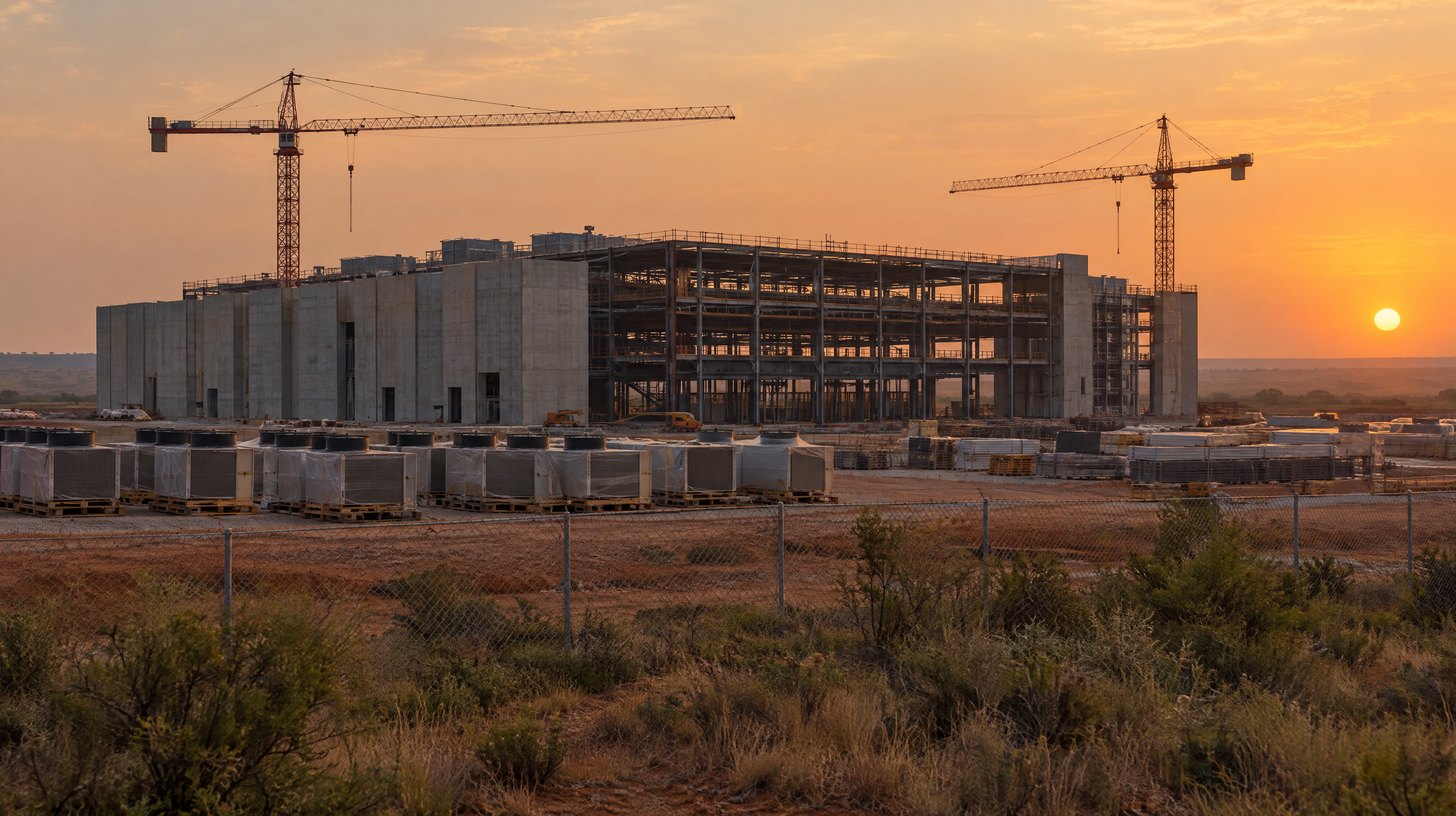
By Thursday they had turned on the AI trade. That is Wall Street shorthand for the companies that make money from artificial intelligence, most of which build chips, computer servers and data centers. A data center is a giant building packed with computers that run AI programs and store information for the internet.
Texas was a big reason. Democrat Gina Hinojosa defeated Governor Greg Abbott after campaigning on a moratorium, a temporary stop, on new data center approvals.2 Investors started asking how many data centers will get built, and how fast. That one question drove the rest of the week.
Keep one idea in mind. When you own a stock, you own a piece of a business. Two things move its price: a change in what the business can earn, and a change in how nervous buyers feel. In my view, most of this week was the second.
What Savvy’s chief investment officer sees
Anshul Sharma is chief investment officer of Savvy Wealth, the firm through which I offer advisory services. On November 6, he and senior research analyst Ani Vedere published a note called “Tech Selloff.”3 Their read sets the frame for this review.
They describe Thursday’s selling as professional investors cutting crowded positions they had been trimming since mid-October, “rather than long-term investors abandoning stocks.” A crowded position is a stock that many big investors own at the same time. When they all head for the door at once, the price drops fast.
The note calls Thursday “largely a knee-jerk reaction.” In Savvy’s words, the policy risk “mostly affects the pace” of the AI build-out, not the demand behind it. Pace means how fast data centers get built. Demand means how much companies actually want to use AI.
Savvy also argues the largest technology companies could come out ahead of a slower build-out. They have the balance sheets to absorb higher compliance costs and longer approvals, data centers already running, and the freedom to build where the rules are friendlier. Smaller players that depend on new construction and outside financing have less room. In Savvy’s view, tighter rules can widen the moat, the protection from competitors, for the biggest companies.
What would change their mind is evidence that demand itself is weakening, such as slowing AI revenue or softer use of cloud computing. Their words: “So far, we haven’t seen that.”
Thursday by the numbers

On Thursday, November 5, the S&P 500 fell 4.4%, the Nasdaq Composite fell 5.5% and the Dow Jones Industrial Average lost 1,833 points.1 Savvy’s note calls it the worst day for stocks since April of last year, and my own check of the closing prices agrees.3
A correction is a drop of 10% or more from a recent high. By Thursday’s close, the Nasdaq sat 11.9% below its October 6 close, so it crossed that line. The S&P 500 did not. It closed Friday 5.65% below its October 6 high, a smaller drop that is usually called a pullback.
The week in four funds
Each of these is an exchange-traded fund, or ETF: a basket of stocks you can buy in one trade. Returns run from October 30 to November 6, 2026.1
| Symbol | What it tracks | Week |
|---|---|---|
| SPY | The S&P 500, weighted by company size (up 7.8% year to date) | −2.7% |
| QQQ | The Nasdaq-100, which holds the most AI names | −5.0% |
| IWM | About 2,000 small U.S. companies | −2.0% |
| RSP | The same 500 S&P companies, each given equal weight | −1.0% |
RSP is the one to watch. It holds the same 500 companies as SPY but gives each the same weight, where the regular index lets the biggest companies count the most. The equal-weight fund fell about 40% as much as the regular one. That tells you the damage sat in a few very large AI companies. In fact, 261 of the 500 S&P 500 stocks I priced went up for the week.
Sectors: two different reasons, one vote
The S&P 500 splits into 11 sectors, groups of companies in the same line of business. This week five rose and six fell. Energy fell 12% as oil dropped on hopes that the U.S. and Iran settle their war through talks. Technology fell 8.2% as the market priced in slower data center construction, and the VanEck Semiconductor ETF (SMH) fell 11.2%.
On the other side, real estate rose 1.9% as the 10-year Treasury yield slipped from 4.94% to 4.86%. Communication services led all sectors, up 4.9%, helped by gains at Take-Two, Charter and Disney.1
Best and worst in the S&P 500
I calculated the weekly return of every S&P 500 member from daily closing prices.1
Top five. AppLovin rose 71.2% after a quarterly report that beat estimates and a bigger buyback, and it is still down 41.9% this year. Fiserv rose 25.7%, Idexx 22.7% and Mosaic 21.6%. Airbnb rose 15.6% after beating estimates and announcing a $12 billion buyback.
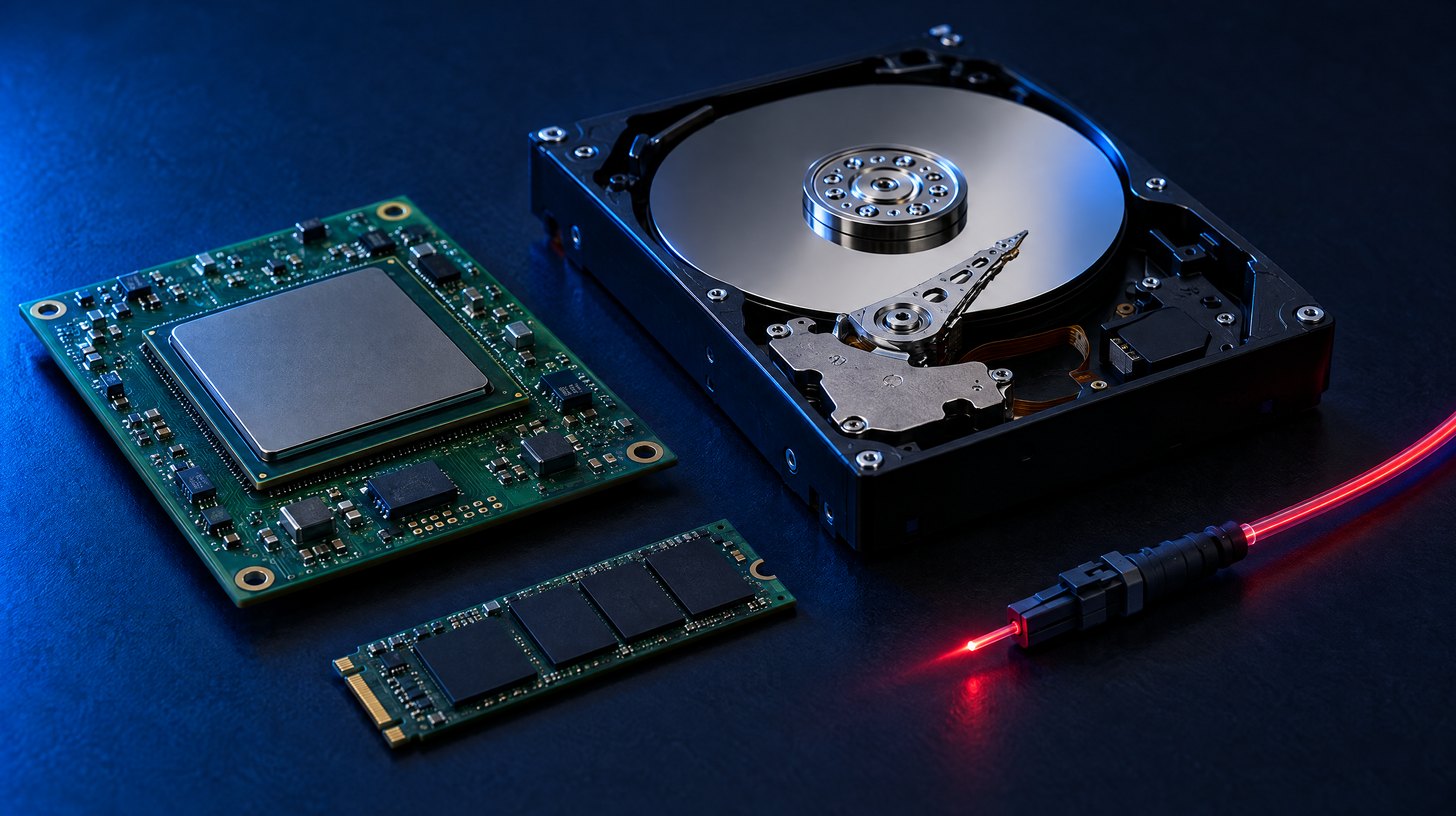
Bottom five. Lumentum fell 35.9%, Seagate 28.5%, Marvell 28.1%, Western Digital 28.0% and SanDisk 27.4%. All five make parts for AI data centers: lasers, custom chips, hard drives and flash memory. Every one is still up between 46% and 252% this year. Big gains and a direct link to data center construction made them the first thing professional sellers reached for. Western Digital and Seagate had both just beaten estimates, and it did not protect the stocks.
Yardeni: speed bumps, not roadblocks
Ed Yardeni of Yardeni Research explained the two days in two notes.4 Overnight into Wednesday, Nasdaq-100 futures fell as much as 2.4%. Then President Trump congratulated Democrats and said he would work with them, and futures turned around. Yardeni’s read of the market’s logic: lower oil means less pressure on prices, a split government limits new deficit spending, and a slower AI build-out could leave the biggest cloud companies with more free cash flow.
Amazon, a stock clients I advise through Savvy hold, and Microsoft each gained more than 6% that day. Yardeni also credits part of the rally to short covering, when investors who bet on a decline have to buy shares back.
On Thursday, investors turned to what a Democratic sweep means for AI investment, which Yardeni calls the economy’s “golden goose.” He cites NBC exit polls showing 76% of voters oppose new data centers in their communities. Texas accounts for nearly 30% of planned U.S. data center additions in 2028, and Goldman Sachs estimates that states facing possible restrictions hold about 45% of planned U.S. capacity. His verdict: political backlash, financing limits and physical bottlenecks are “speed bumps, not roadblocks,” and he called the selloff a buying opportunity.5
After the close, Hinojosa said on CNN that all currently permitted Texas data centers can finish construction.
The other side
A ban that only slows new approvals still pushes revenue for chip, drive and laser suppliers further out, and those suppliers were this week’s five worst S&P 500 stocks. Reuters reported that UBS strategists estimate about 30% of expected 2028 data center additions could be affected by delays.6 If more states follow Texas, that timing problem grows.
The economy looked healthy underneath
- Jobs: employers added 165,000 jobs in October against roughly 60,000 expected, and unemployment fell to 4.1%.3
- Productivity: non-farm productivity rose at a 3.6% annual rate in the third quarter.5
- Layoffs: initial jobless claims fell to 189,000 for the week ended October 31. The four-week average of 194,750 is the lowest since 1969.
- The Fed: on October 28 it held its key rate at 3.75% to 4.00%, with two officials voting for a hike.7 By Thursday, futures priced about 1.7 quarter-point hikes over the next 12 months. The next decision is December 9.
Sharma’s line sums it up: Thursday was about positioning and policy uncertainty in one part of the market, not about the underlying economy.3
Oil fell 13%, and that cuts both ways

Brent crude, the main world oil price, closed the week at $98.32 a barrel, down 13.3% from $113.43.1 It fell 7.6% on Monday as Iran signaled it was willing to negotiate an end to the war, and another 8.7% on Wednesday.8
Lower oil eases inflation, because oil feeds into the cost of gas, shipping and heating, and less inflation could mean fewer rate hikes. It also means less cash for the companies that pump it. Gold went the other way. The SPDR Gold Shares fund rose 4.7% for the week, though it is still down 6% for the year.
Record earnings, cheaper prices
Yardeni’s November 7 note says the blended third-quarter earnings-per-share growth estimate for the S&P 500 rose to 25.9% from a year earlier. S&P 500 forward earnings, what analysts expect over the next 12 months, reached a record $418.25. The forward price-to-earnings ratio fell to 17.6, below its Liberation Day low of last year, and the semiconductor group’s forward P/E dropped to 13.1.9
A P/E of 17.6 means paying $17.60 for every $1 of expected yearly earnings. Profits keep rising while prices pull back, so the market is getting cheaper compared with what it is expected to earn. The risk, which Yardeni names himself, is that investors now doubt the analysts’ forecasts can be reached. A low P/E only helps if the earnings actually show up.
Client-held stocks: top 5 and bottom 5
These are stocks that clients I advise through Savvy hold. They are individual stock returns, not the return of any portfolio or model, based on daily closing prices from Fiscal.ai and Financial Modeling Prep, October 30 to November 6, 2026.1
| Top five | Week | Bottom five | Week |
|---|---|---|---|
| Interparfums (IPAR) | +16.5% | Diamondback Energy (FANG) | −15.6% |
| Amazon (AMZN) | +7.9% | AMD (AMD) | −11.1% |
| Copart (CPRT) | +6.0% | Tesla (TSLA) | −10.4% |
| Kinsale Capital (KNSL) | +4.9% | Broadcom (AVGO) | −9.9% |
| Home Depot (HD) | +4.3% | Nvidia (NVDA) | −8.8% |
Amazon’s cloud business, AWS, grew sales 39.3% in the third quarter, its fastest growth in nearly five years, though total revenue and earnings missed estimates. The split among these stocks matched the split in the market. Stocks tied directly to the AI build-out were the weakest, along with the one tied directly to oil. The strongest were a fragrance company with better profit margins, the largest cloud provider, and businesses with nothing to do with data centers or crude. In my view, none of the bottom five reported news this week that changes what the business earns over the next decade. They repriced with policy and oil risk.
Interparfums: margins on the worst day
Interparfums designs and sells perfume under long-term licenses from fashion brands such as Coach, Montblanc, Jimmy Choo and Guess. A license is permission to use someone else’s brand name in exchange for a fee. The company does not own factories or stores. It designs the fragrance, pays others to make it, and sells to department stores and distributors around the world.
On November 4, it reported its third quarter.10 Sales were flat at $430 million. Gross margin, the share of each sales dollar left after paying to make the product, was 67.1%, up 3.6 percentage points. Operating margin, what is left after the costs of running the business too, was 27.4%. The company raised its full-year sales guidance to $1.49 billion.
The stock rose 9.5% on November 5, the same day the S&P 500 fell 4.4%, and finished the week up 16.5%.1 In my view, the company is held for its margins, its balance sheet and the cash it returns to owners. At September 30 it had $240 million of cash and short-term investments against about $147 million of long-term debt, and it pays a dividend of 80 cents a share each quarter.
The risks are real. Sales did not grow in the quarter, so this year’s gain came from margins and the share price, not from growth. Licenses expire and can be lost. At Friday’s price the stock trades at a P/E of about 28 on the company’s own forecast of $4.85 a share for this year, so it prices in more than it did a year ago.
Diamondback: a strong quarter, a falling stock
Diamondback Energy drills for oil and natural gas in West Texas, and its cash flow moves with the price of oil. The stock fell 15.6% for the week, from $212.08 to $178.96. On Monday, Tuesday and Wednesday, it fell on the same days oil fell.1
My view is that the Democratic sweep raised the odds the war with Iran winds down, and the market priced in lower oil. The business itself, in my view, just had a strong quarter: $2.1 billion of free cash flow, $582 million returned to shareholders through dividends and buybacks, a 7.3% dividend increase and a higher production forecast.11
Its main risk is that Diamondback does not set the price of what it sells. If a U.S.-Iran deal reopens supply, oil can keep falling, and that cuts the cash available for buybacks. If talks stall, oil can rebound as fast as it fell.
Three takeaways
- The election changed the price of AI risk, not AI demand. Ed Yardeni and Savvy’s CIO reached the same conclusion from different starting points: tighter data center rules slow the pace of the build-out. Savvy wants to see slowing AI revenue or softer cloud usage before calling a turn, and so far it has not.
- Oil fell 13% on peace hopes. That helps inflation and hurts oil producers. Diamondback’s 15.6% drop came days after a quarter with $2.1 billion of free cash flow and a dividend increase.
- Earnings kept rising while prices fell. S&P 500 forward earnings hit a record $418.25, and the forward P/E fell to 17.6.
What comes next
October inflation numbers, the Consumer Price Index (CPI), come out November 10. Nvidia reports earnings November 17, the next big read on AI demand. The Fed’s next decision is December 9.
Both outcomes are possible from here. If CPI comes in at or below the 3.7% expected and oil holds below $100, the case for this week’s selling gets weaker. If inflation runs hot, more newly elected officials echo the Texas moratorium, and analysts cut their forecasts for chip and drive suppliers, the Nasdaq’s correction can deepen.
Days like Thursday test discipline.
“Selling after a sharp drop has historically been one of the costliest mistakes investors make. Pullbacks happen most years, and ownership is measured in decades, not days.”
Anshul Sharma and Ani Vedere, Savvy Wealth, November 6, 2026
Does your plan hold up on a day like Thursday?
If a week like this one has you second-guessing your plan, book a time to talk it through with David.
Notes
- Daily closing prices from Fiscal.ai and Financial Modeling Prep, October 30 to November 6, 2026, with VAP Wealth Advisors calculations of daily and weekly returns. ↩
- Reuters via The Star, “Texas data centers face uncertain future after Hinojosa wins governor’s race,” November 5, 2026. Link. ↩
- Anshul Sharma and Ani Vedere, “From the CIO’s Desk: Tech Selloff,” Savvy Wealth, November 6, 2026. ↩
- Ed Yardeni, Yardeni QuickTakes, Yardeni Research, November 4, 2026. Link. ↩
- Ed Yardeni, Yardeni QuickTakes, Yardeni Research, November 5, 2026. Link. ↩
- MarketAnalysis.com, citing Reuters, November 5, 2026. Link. ↩
- Savvy Wealth, “October 2026 Global Markets Recap.” Link. ↩
- Oil & Gas 360, coverage of Iran negotiations, November 2, 2026. Link. ↩
- Ed Yardeni, Yardeni Research, November 7, 2026. Link. ↩
- Interparfums, Inc., third-quarter 2026 results release, GlobeNewswire, November 4, 2026. Link. ↩
- Diamondback Energy, Inc., third-quarter 2026 results release, GlobeNewswire, November 2, 2026. Link. ↩
Important Disclosures
This content is produced by David Berkowitz under ValueAligned Partners, LLC, DBA VAP Wealth Advisors (“VAP Wealth Advisors”), an independent marketing brand, and is provided for general educational and informational purposes only. It is not, and should not be construed as, personalized investment, legal, tax, or accounting advice, nor an offer or solicitation to buy or sell any security.
No advisory relationship. Viewing, reading, or interacting with this content does not create an investment-adviser, attorney-client, or accountant-client relationship. David Berkowitz is an investment adviser representative registered with Savvy Advisors, Inc. (“Savvy”), and all investment advisory services he provides are offered through Savvy. Investment advisory services are offered only through a written agreement with Savvy. ValueAligned Partners, LLC, DBA VAP Wealth Advisors, is an independent marketing brand used for advertising and marketing purposes only; ValueAligned Partners, LLC and Savvy are not related or affiliated. Additional information is available in Savvy Advisors’ Form ADV Part 2A and Form CRS at adviserinfo.sec.gov.
Not legal or estate-planning advice. David Berkowitz is not an attorney, and VAP Wealth Advisors does not practice law, draft legal documents, or provide legal opinions. Any discussion of wills, trusts, powers of attorney, beneficiary designations, or other estate-planning topics is general education only. You should consult a licensed attorney in your state before drafting, signing, or relying on any estate-planning document.
Not tax or accounting advice. David Berkowitz is not a CPA or Enrolled Agent, and VAP Wealth Advisors does not prepare tax returns or provide tax-return preparation services. Any discussion of tax topics is general education intended to help you understand tax-planning concepts and coordinate with your CPA or tax preparer. You should consult a qualified tax professional regarding your specific situation before acting on anything discussed here.
No guarantees; investment risk. All investing involves risk, including possible loss of principal. Past performance is not indicative of, and does not guarantee, future results. Forward-looking statements are opinions as of the date recorded and are subject to change without notice.
Sources and third-party content. Links, tickers, and third-party materials are provided for convenience and do not constitute an endorsement. VAP Wealth Advisors is not responsible for the content of third-party sites.
Positions. David Berkowitz, his clients, employees, and family may own the stocks mentioned in this content. He is under no obligation to update the content or to disclose any future purchases or sales of those stocks.
These figures are based on historical market data over the periods studied and are provided for educational purposes only. Past performance does not guarantee future results.
References to specific securities are for illustration and education only and are not a recommendation to buy, sell, or hold any security. David Berkowitz, his clients, and family may hold positions in securities discussed, and those positions may change at any time without notice. Individual holdings depend on each client’s objectives, risk tolerance, tax situation, and time horizon. Consult your own adviser regarding suitability for you. David Berkowitz, his clients, employees, and family may own the stocks mentioned in this content. He is under no obligation to update the content or to disclose any future purchases or sales of those stocks.
All advisory services are offered through Savvy Advisors, Inc. (“Savvy Advisors”), an investment advisor registered with the Securities and Exchange Commission (“SEC”). Savvy Wealth Inc. (“Savvy Wealth”) is a technology company and the parent company of Savvy Advisors. Savvy Wealth and Savvy Advisors are often collectively referred to as “Savvy”.
David L Berkowitz is an investment advisor representative registered with Savvy Advisors, Inc. (“Savvy”). All investment advisory services offered by David L Berkowitz are offered through Savvy. ValueAligned Partners, LLC (also doing business as VAP Wealth Advisors) is an independent marketing brand name used by David L Berkowitz for advertising and marketing purposes only. ValueAligned Partners, LLC and Savvy are not related or affiliated. For more information about Savvy, please visit our website at savvywealth.com/advisor.