
By David L. Berkowitz, Founder and Chief Investment Officer at ValueAligned Partners
With over 40 years of experience in investment management and corporate finance, David’s insights stem from decades of firsthand research, portfolio leadership, and executive advisory work. He developed the ValueAligned Investing® framework, blending classic value investing with modern performance metrics, such as EVA, to identify great companies trading below their intrinsic value. A Columbia MBA and former Principal at Stern Stewart & Co., David’s mission is to democratize institutional investing—helping individuals build lasting wealth through ownership rather than speculation.
What Are the Biggest Hidden Financial Fears for Those Over 50?
The primary anxieties fall into three categories: fear of loss, fear of being misled, and fear of hidden costs.
How Does Fear of Market Volatility Impact Pre-Retirees?
For many in their 50s and beyond, it manifests as a “quiet terror” that a market crash will wipe out decades of savings right when they need it most. The Navigating Financial Advice report identifies this as a “paramount concern,” as a significant loss near retirement is difficult to recover from. Imagine retiring at 65, only to see your $500,000 portfolio drop 30%—that’s $150,000 gone when you can least afford it. This fear is widespread; a 2021 AARP survey found that 60% of adults over 50 worry about outliving their money, a fear massively amplified by market uncertainty. The core anxiety isn’t just about market-timing; it’s about the lack of time to recover from a significant loss so close to retirement. Your advisor may talk strategy, but do they grasp how deeply this risk haunts you?
Why Do Pre-Retirees Distrust Their Financial Advisors?
Trust is hard-earned, and a “deep-seated distrust” exists among the 50+ demographic. This is often fueled by fears of financial exploitation or advisors prioritizing their own profits (via commissions) over the client’s needs. This isn’t just paranoia; personal tales of losses from misleading advice are familiar, with users online lamenting a broker’s self-serving recommendations. Data validate this fear: a 2022 FINRA report revealed that seniors lose over $2.9 billion annually to financial scams, which sometimes involve advisors. This distrust creates a barrier that stops clients from asking the very questions they need answered, creating a cycle of fear and suspicion: Is my advisor truly on my side?
Are Hidden Fees a Legitimate Retirement Worry?
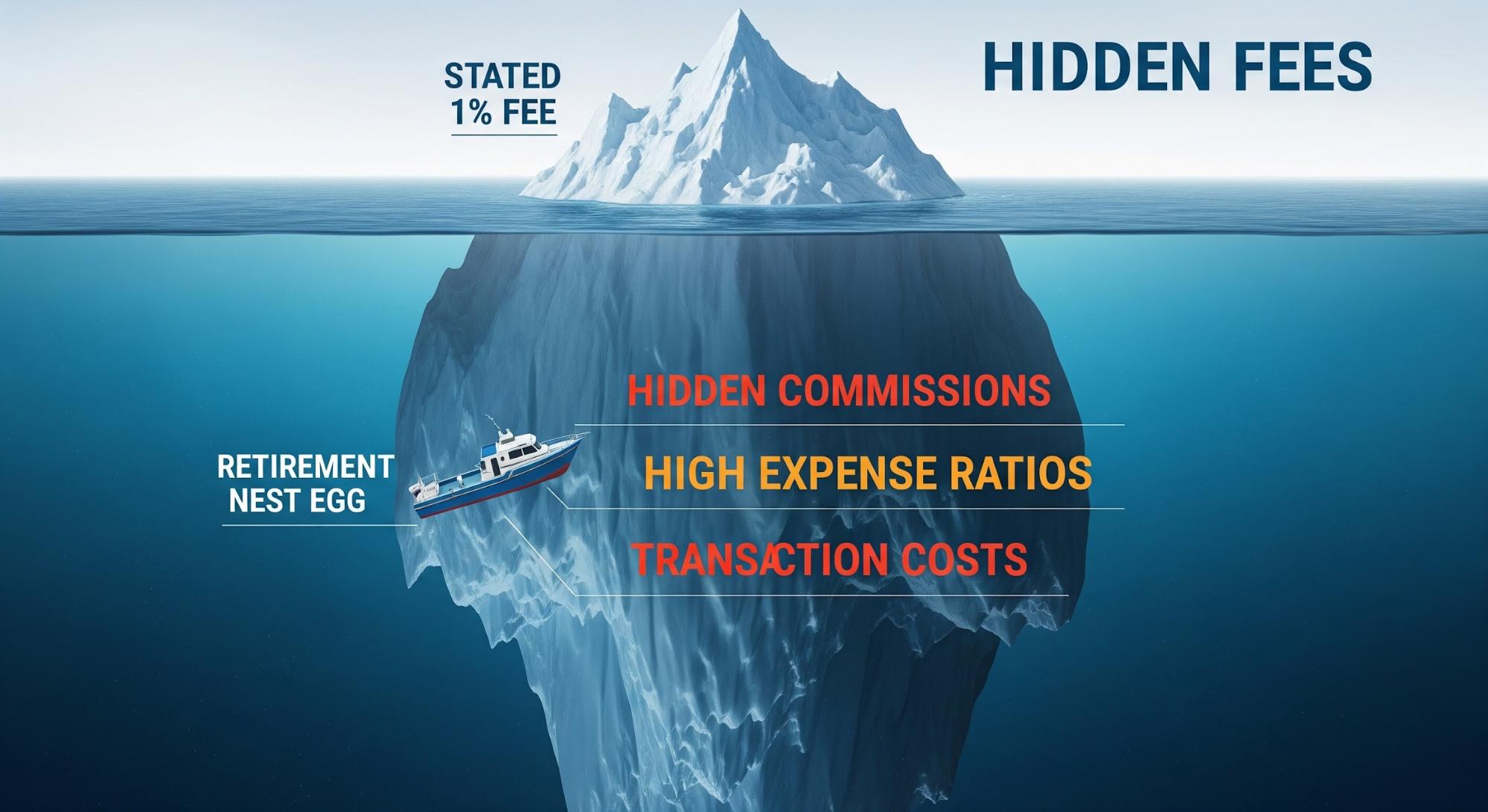
Yes. The cost of advice can feel like a silent thief. Many in the fifty-plus crowd quietly worry that high or hidden fees will shrink their retirement funds. The “assets under management” (AUM) fee—say, 1% annually—is a primary concern, especially if the value added is unclear. On a $1 million portfolio, a 1% AUM fee costs $10,000 per year. Over 20 years, this can compound to a $200,000 loss in potential returns. Online commenters also warn that advisors layer fees on expensive products, such as annuities with 2-3% expense ratios. The lack of fee transparency is a significant source of anxiety. The lingering fear is: Am I paying more than I’m getting?
The Personal Anxieties You’re Afraid to Voice
Beyond market fears, many pre-retirees grapple with personal feelings of inadequacy or being misunderstood—fears that are rarely shared with an advisor.
Why Does Financial Jargon Make Me Feel Inadequate?
Financial lingo can feel like a foreign language, and the Navigating Financial Advice report flags this as a significant source of anxiety for the 50+. Many are too embarrassed to admit they don’t understand. Picture sitting across from your advisor, nodding at “asset allocation” while secretly panicking—what if you’re missing something critical? You are not alone. A Kitces.com study found that 70% of clients struggle with terms such as “fiduciary” and “expense ratios.” This fear of “looking stupid” prevents people from fully engaging, leaving them vulnerable and unable to vet their advisor’s strategy properly.
What If My Advisor Doesn’t Understand My Unique Goals?
A common fear is receiving “generic or template” advice that overlooks specific individual needs, such as funding long-term care, planning a legacy, or providing for family. Your dreams are unique—travel, grandkids, charity—but silently, you wonder: Does my advisor get me? A Reddit user expressed frustration with advice that felt one-size-fits-all and ignored their specific aspirations. A 2023 Merrill Lynch survey found that 65% of retirees with personalized plans felt more secure than those without. A financial plan is useless if it’s not aligned with your personal aspirations; a “one-size-fits-all” plan often fits no one well.
Why Am I Paralyzed by the Fear of Making One Wrong Move?
When you’re over 50, time is no longer on your side. There is an “unspoken worry about making irreversible investment mistakes” because there is no time to recover. Losing your job at 52 or facing a significant market downturn at 64 feels catastrophic, as rebuilding that nest egg feels impossible. A 2024 Edward Jones study estimates that a 20% portfolio loss at age 55 takes 7 years to recover with average returns, time you might not have. This high-stakes reality can lead to paralyzing indecision, which is, in itself, a risky financial choice. One wrong move feels like it could unravel everything.
How to Bridge the Gap: A 3-Step Framework for Voicing Your Fears
Silence won’t protect you—speaking up will. Based on my analysis, you can bridge this communication gap and regain control by following a straightforward, three-step process.
Step 1: Ask Tough, Specific Questions to Ensure Transparency
Don’t be vague. The Navigating Financial Advice report suggests asking direct questions to demand clarity. A 2023 CFP Board survey found that 80% of clients who asked direct questions felt more confident in their advisor.
Questions to Ask Your Advisor Today:
- “Are you a fiduciary, and can I have that commitment in writing?”
- “How exactly do you get paid? Is it from commissions, fees, or both?”
- “Can you provide a full, all-in breakdown of the fees I am paying, including expense ratios and any AUM (Assets Under Management) charges?”
Step 2: Find an Advisor Who Acts in Your Best Interest
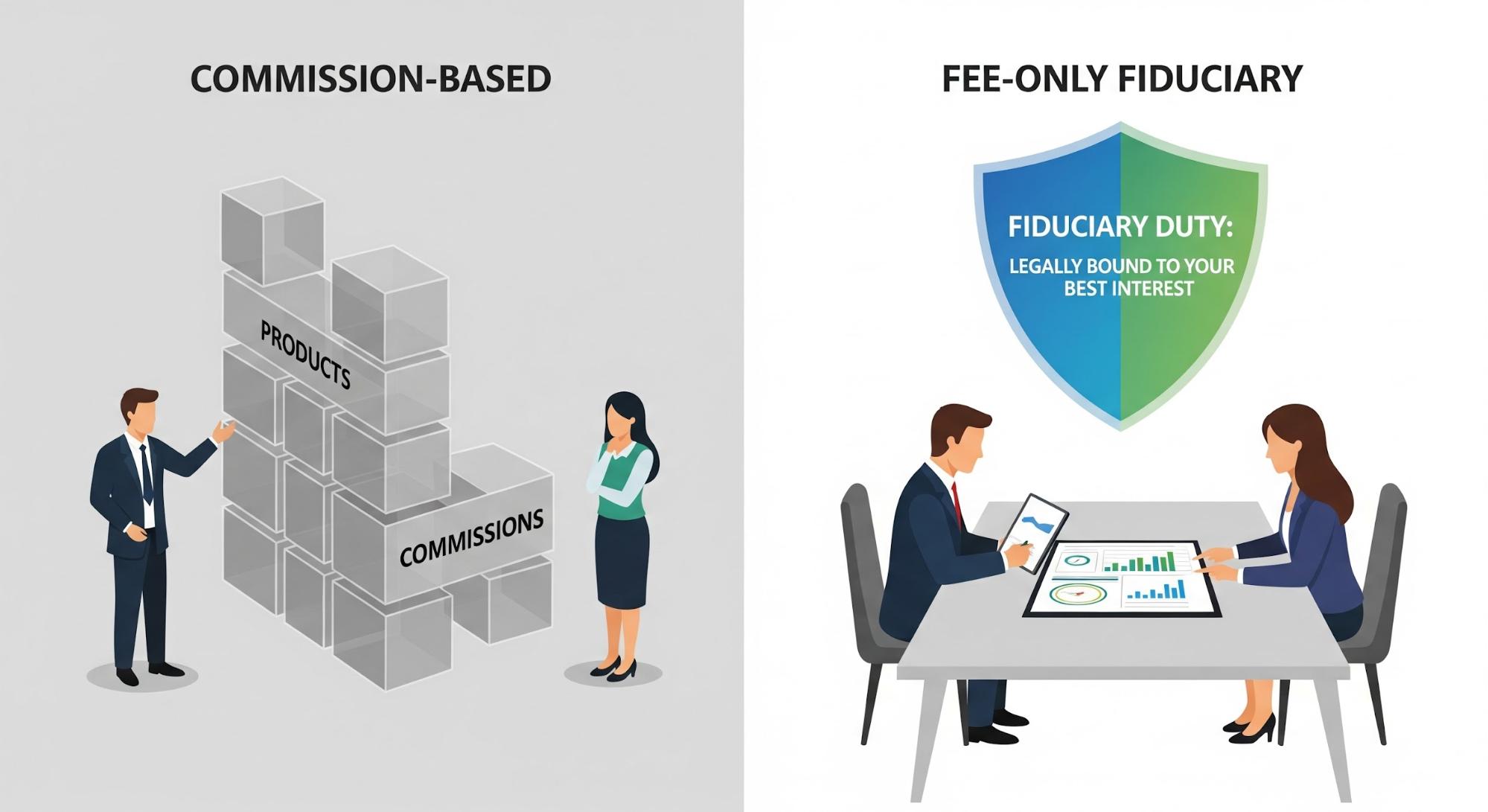
Actively seek out a fee-only, fiduciary advisor. This model minimizes conflicts of interest because they are paid only by you, not by commissions from products they sell. Only 35% of advisors are fee-only, according to a 2022 Morningstar estimate, but they are worth seeking out.
How to Verify Your Advisor:
- Check Credentials: Look for a Certified Financial Planner (CFP) designation,.
- Use the SEC Database: Use the SEC’s official adviser database to check their record and compensation structure.
An advisor legally bound to your interests can ease that silent dread of exploitation, focusing on your retirement, not their profits.
Step 3: Empower Yourself with Foundational Knowledge
You don’t need a finance degree, but you must “learn the basics” to feel less inadequate and be a better partner in your own financial future. A 2024 Vanguard study found that self-educated investors saved an average of 0.5% annually in fees simply by questioning their advisors.
Where to Start:
- Understand what an “AUM fee” is.
- Learn the difference between an “index fund” and an “actively managed fund.”
- Know what “fiduciary” means.
When you know enough to challenge jargon or spot red flags, those silent fears shrink, and your voice grows stronger.
Your Action Plan: From Silent Fear to Retirement Confidence
Retirement should spark joy, not silent dread. The 50+ carry hidden fears—losing savings, distrusting advisors, feeling lost in jargon—but you don’t have to bear them alone.
In my experience, the single biggest shift from anxiety to confidence comes from articulation. When you voice a fear, it becomes a tangible problem that you and a qualified advisor can solve together.
Your fears are not unique; the Navigating Financial Advice report shows they are universal, but solvable. Your action plan is to:
- Ask: Start the conversation. Use the tough questions listed above. Your advisor can’t address what they don’t know.
- Verify: Seek a fiduciary who “gets you” and your unique goals.
- Learn: Arm yourself with foundational knowledge.
Speak up, and step into retirement with confidence, not quiet terror.
FAQs: Your Questions Answered
How Do I Tell My Advisor I’m Worried About Fees?
Try this phrasing: “Can you break down all my costs clearly so I can understand the total value I’m receiving?” Honest advisors welcome transparency.
What If My Advisor Doesn’t Understand My Retirement Goals?
Be direct. Say: “Here’s what I want my retirement to look like—can we build a plan that is aligned with this?” If they can’t or don’t listen, find one who will.
How Can I Know If My Advisor Is Truly Competent?
Check their CFP status, ask about their retirement-specific experience, and test their explanations. If they can’t explain a strategy in simple terms, it’s a red flag.
Our Sources
Hey, these are our sources.
Navigating Financial Advice: Understanding the Needs of the Fifty-Plus Audience, Main Report, (Data Source).
AARP, “2021 Retirement Savings Survey,” accessed March 22, 2025.
FINRA, “2022 Senior Investor Protection Report,” accessed March 22, 2025.
A personal tale of why active brokers can be the worst, r/personalfinance, Reddit, accessed March 22, 2025.
50 years old – finally time for a financial planner?, r/FinancialPlanning, Reddit, accessed March 22, 2025.
Helping Prospects Overcome Their Financial Advisor Anxiety, Kitces.com, accessed March 22, 2025.
Is working with a financial advisor worth it?, r/personalfinance, Reddit, accessed March 22, 2025.
Financial Planning Checklist to Achieve Your Goals, Merrill Lynch, accessed March 22, 2025.
I am in early 50s and struggling with single income, r/personalfinance, Reddit, accessed March 22, 2025.
Financial Strategies for your 50s, Edward Jones, accessed March 22, 2025.
Morningstar, “2022 Advisor Competency Report,” accessed March 22, 2025.
Is working with a financial advisor worth it?, r/personalfinance, Reddit, accessed March 22, 2025.
Industry estimate based on annuity commission data, 2024.
Top Challenges for Financial Advisors, Investopedia, accessed March 22, 2025.
CFP Board, “2023 Client Confidence Survey,” accessed March 22, 2025.
Morningstar, “2022 Fee-Only Advisor Trends,” accessed March 22, 2025.
Vanguard, “2024 Investor Literacy Impact Study,” accessed March 22, 2025.
Fidelity, “2023 Advised vs. DIY Portfolio Performance,” accessed March 22, 2025.
AARP, “2024 Long-Term Care Planning Survey,” accessed March 22, 2025.
How to Help Clients Stay on Track with Retirement Savings Goals, Ascensus, accessed March 22, 2025.