
By David L. Berkowitz, Founder and Chief Investment Officer at ValueAligned Partners
With over 40 years of experience in investment management and corporate finance, David’s insights stem from decades of firsthand research, portfolio leadership, and executive advisory work. He developed the ValueAligned Investing® framework, blending classic value investing with modern performance metrics, such as EVA, to identify great companies trading at a discount to their intrinsic value. A Columbia MBA and former Principal at Stern Stewart & Co., David’s mission is to democratize institutional investing—helping individuals build lasting wealth through ownership, not speculation.
Takeaway 1: Why is the AI Revolution Supercharging Demand for Natural Gas, Not Renewables?
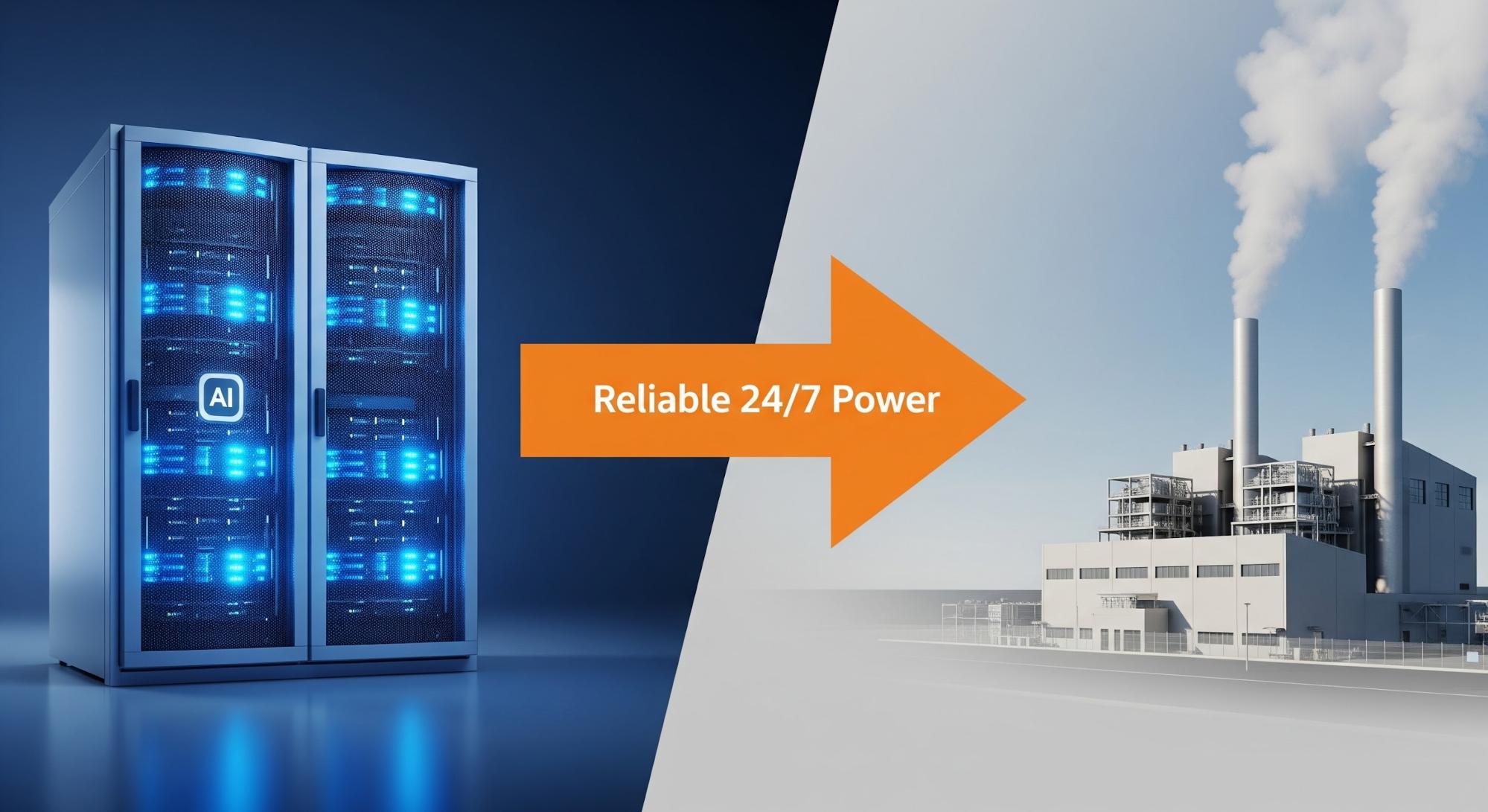
The explosive growth of Artificial Intelligence is triggering an unprecedented capital spending boom and, with it, a colossal increase in demand for electricity to power data centers.
While many assume renewable sources would power this futuristic technology, the operational reality our research has identified is starkly different. The only timely way to deliver the immense and reliable 24/7 energy required to meet this new demand is to add incremental generating capacity using natural gas.
This dependency has several critical implications:
- It necessitates continued growth in natural gas exploration and drilling.
- It requires a significant build-out of new pipeline transportation capacity.
- It means that, for the foreseeable future, one of the world’s most advanced technologies is dependent on and actively driving significant growth in the fossil fuel sector.
Takeaway 2: Is the “Green Energy” Movement Fading?
Yes. Based on my analysis of policy and economic data, the foundations of the green energy movement are crumbling. This is occurring just as the surging demand for reliable power from AI and data centers hits the grid.
Across developed nations, consumer and voter pushback against the high costs and disruptions of large-scale green projects is intensifying. This is not just anecdotal; my findings show a clear trend.
|
Cause of Reversal |
Evidence & Impact |
|
Voter & Consumer Pushback |
Intensifying resistance to the high costs and disruptions of large-scale green projects. |
|
Project Rejection Rate |
Since 2003, over 1,100 proposed green energy projects have been rejected, with the rejection rate increasing dramatically in recent years. |
|
Policy Pivot |
Governments are actively pivoting away from the subsidies and mandates that previously propped up the sector. |
|
Market Consequences |
This reversal threatens demand for solar panels and windmills. It is also expected to cause imported electric vehicles to “disappear from North America and Europe”. |
This marks a decisive turn away from the energy policy consensus of the past two decades, creating the political will to unleash a new pro-growth, energy-forward agenda.
Takeaway 3: How America’s Shale Revolution Fundamentally Remapped Global Power
The North American shale revolution, powered by groundbreaking innovations such as hydraulic fracturing and lateral drilling, fundamentally shattered the decades-long dynamic of U.S. and European dependence on OPEC.
By transforming the United States into a net energy exporter, the revolution has severely undermined OPEC+’s market power. This strategic advantage is now being “supercharged” by new policies designed to eliminate key bottlenecks.
From my analysis, this strategy involves three core actions:
- Opening Resources: Opening vast public lands for drilling.
- Solving Refining: Fast-tracking solutions for the chronic shortage of domestic refining capacity.
- Building Infrastructure: Accelerating the build-out of oil and gas pipeline projects, which have been the revolution’s “tightest bottleneck”.
This newfound energy independence gives the U.S. immense geopolitical leverage. As Energy Secretary Chris Wright emphasized, this capacity is tangible: “America is ready today to displace all the Russian gas entering Europe, and also all Russian refined petroleum products. We have the capacity, and we are prepared to meet your needs”.
Takeaway 4: What is Driving the New Nuclear Renaissance?

As we chart the long-term energy future, nuclear power is re-emerging as a critical pillar. This renaissance is being driven by a key technological revolution: Small Modular Nuclear Reactors (SMRs).
Based on my analysis of the technology, SMRs offer distinct advantages over legacy nuclear plants:
- Safer & Cheaper: They promise to be “far safer and cheaper” than legacy technology.
- Scalable: Their primary advantage lies in scalability.
- Mass-Produced: They can be mass-produced in factories and installed closer to the point of consumption, reducing complexity and cost.
This technological shift is backed by a clear strategic vision. A recent executive order mandates that U.S. nuclear generating capacity must quadruple by 2050. To achieve this, the U.S. aims for self-sufficiency in nuclear fuel by 2035 by developing new domestic uranium-enrichment capabilities.
A critical breakthrough in this area appears imminent. Our research indicates “a new separation process based on laser technology seems poised for a breakthrough,” which promises to overcome the high cost and complexity of current enrichment methods.
Takeaway 5: Could This Energy Shift Create a North American Super-State?
One of the most dramatic geopolitical forecasts arising from this energy counterrevolution is, in fact, a potential realignment of North America itself.
Projections our team has analyzed indicate that Canada’s Western provinces, led by Alberta, will break away and economically integrate with the United States before 2030.
Here is the “before and after” scenario this forecast presents:
- Current Scenario (The “Why”): The rationale is that federal policies from Ontario and Quebec have “strangled the enormous energy and agricultural potential” of these resource-rich Western provinces.
- Future Scenario (The “Benefit”): An economic merger with the U.S. would unleash this potential, creating a single, continental entity.
This realignment would provide a massive strategic benefit, creating an entity that would be the “world’s undisputed leader in both Energy and agriculture,” fundamentally securing the continent’s economic and political future.
Conclusion: A New Era of Abundance and an Investor’s Framework
These five trends are not random, disconnected events. They are an “interlocking system”.
As an investor, seeing this pattern is critical: The AI boom’s insatiable demand for power is being met by a shale revolution that is, in turn, supercharged by a policy pivot away from failing green initiatives. This fossil-fuel bridge leads to a long-term future secured by a nuclear renaissance, which is driving a continental realignment of historic proportions.
This transformation marks a decisive shift from the 20th-century paradigm of energy scarcity to a new reality of energy abundance, built on technological realism and geopolitical ambition.
A Framework for Navigating the Counterrevolution
Based on my 40 years of experience using the ValueAligned Investing® framework, the key to capitalizing on this shift is to move past outdated narratives and focus on the new structural realities. Here is a 3-step process to guide your analysis:
- Identify the New Bottlenecks: The 20th-century bottleneck was supply (OPEC dominance). The 21st-century bottleneck is infrastructure—pipelines, refining capacity, and grid reliability. Companies solving these bottlenecks hold immense value.
- Follow the Capital: Analyze the “colossal” capital spending boom in AI data centers and the strategic capital deployment mandated for the nuclear renaissance (quadrupling capacity by 2050). The beneficiaries of this capital will be long-term winners.
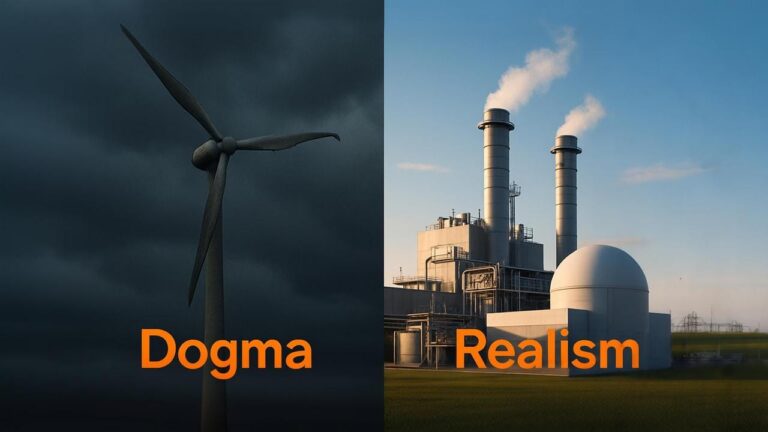
- Invest in Realism, Not Dogma: The market is repricing assets based on the failure of the green energy policy consensus and the success of the shale revolution. Identify companies that provide real, reliable energy (natural gas, nuclear) and the infrastructure that supports them.