By David L. Berkowitz, Founder and Chief Investment Officer at ValueAligned Partners
With over 40 years of experience in investment management and corporate finance, David’s insights stem from decades of firsthand research, portfolio leadership, and executive advisory work. He developed the ValueAligned Investing framework, blending classic value investing with modern performance metrics, such as EVA, to identify great companies trading at a discount to their intrinsic value. A Columbia MBA and former Principal at Stern Stewart & Co., David’s mission is to democratize institutional investing—helping individuals build lasting wealth through ownership rather than speculation.
The 60-Second Analysis
Here is my analysis of OpenAI’s new workforce initiatives.
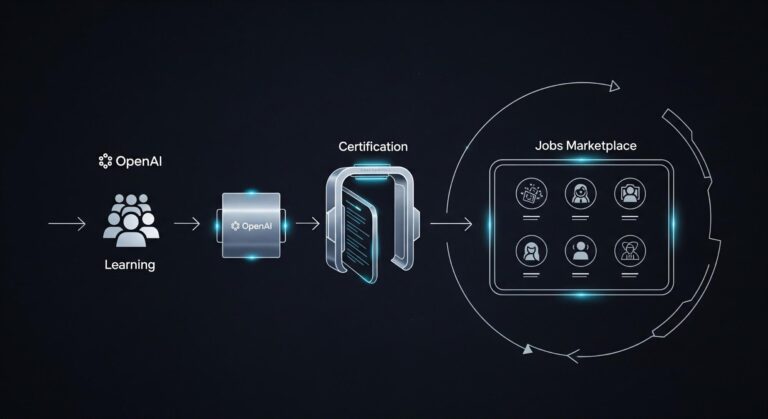
- What’s Happening? OpenAI is launching a “Workforce Blueprint,” a two-part strategy featuring a new OpenAI Jobs Platform and a national OpenAI Certifications program.
- The Core Strategy: This is not just a new product. It’s a calculated, vertically integrated strategy to build an end-to-end talent pipeline. OpenAI is positioning itself as both the catalyst for AI-driven job disruption and the essential provider of the solution.
- The Platform vs. LinkedIn: The Jobs Platform is engineered as a “skills-first” semantic matching engine. It challenges the “network-first” dominance of incumbents like LinkedIn by promising to match candidates on provable skills, not just keywords or connections.
- The “New Standard”: The Certifications program, which aims to certify 10 million Americans by 2030, is designed to establish “OpenAI fluency” as the de facto market standard, amplified by partners like Walmart.
- The Critical Risk: This strategy creates two profound dangers: “credential capture” (an anti-competitive “closed garden” that favors OpenAI’s own certs) and scaled algorithmic bias, which can perpetuate discrimination under a veneer of objectivity.
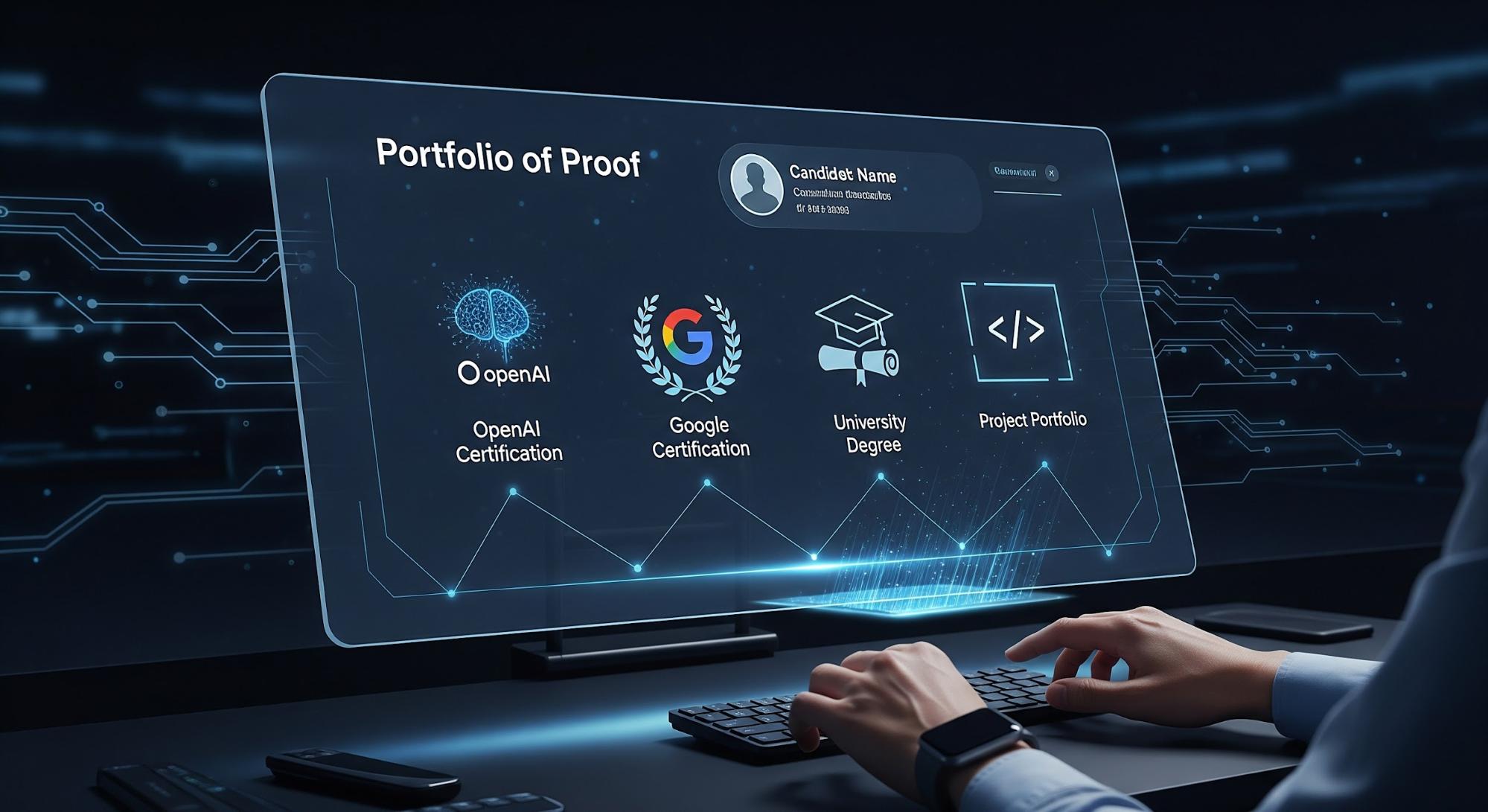
- My Core Recommendation: Business leaders must adopt a “portfolio of proof” approach. Do not rely on a single vendor’s credentials. Instead, diversify your hiring signals to include multiple certifications, university programs, and real-world project portfolios to avoid vendor lock-in and ensure you’re hiring the best, most qualified talent.
What is OpenAI’s “Workforce Blueprint” Strategy?
Based on my analysis of the company’s “Workforce Blueprint” document, OpenAI’s foray into the HR market is a sophisticated dual imperative—it is both defensive and offensive.
First, it’s a defensive reputational maneuver. With its own leadership warning of AI-driven job destruction, the company faces massive public anxiety and regulatory scrutiny. This program is tangible proof that OpenAI is a “proactive part of the solution,” a public affairs strategy to mitigate backlash.
Second, and more importantly, it’s an offensive economic strategy. OpenAI is executing a classic ecosystem playbook to build a deep, defensible moat. The goal is to evolve from being a provider of a utility (AI models, which are becoming commoditized) into the central, indispensable hub of the entire AI-powered economy.
Critical Insight: By seeking to own the standards for AI skills, the platform for training them, and the marketplace where they are traded, OpenAI is creating powerful ecosystem lock-in. They are strategically positioning themselves as the “arsonist and the firefighter”—selling the cure for the very disruption they engineered.
The Flywheel: How OpenAI’s Talent Ecosystem Connects
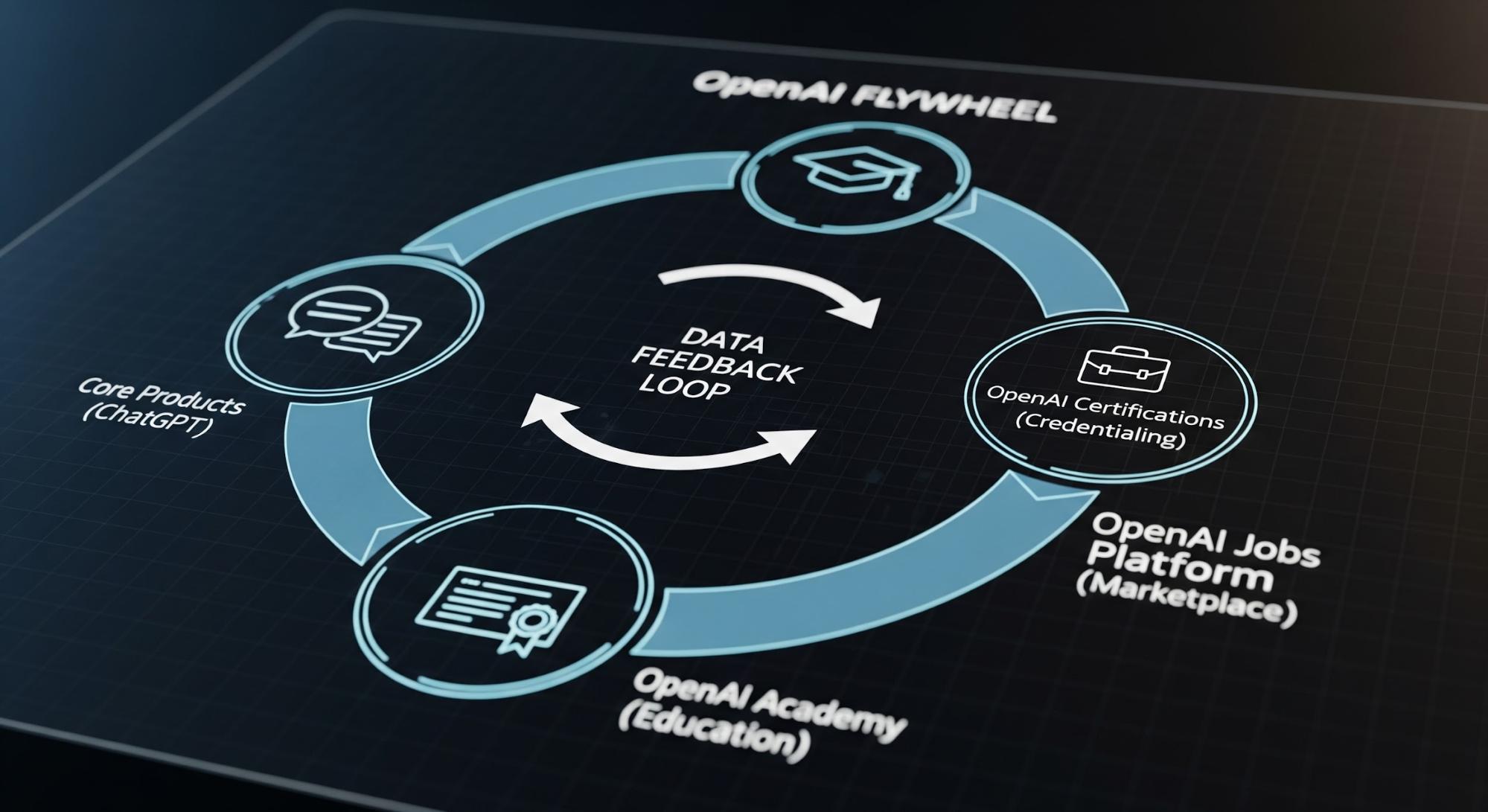
This strategy is not a set of isolated products; it’s a self-reinforcing, vertically integrated talent pipeline. From my perspective, this “flywheel” model is designed to operate in a continuous loop.
Here is the step-by-step process:
- Core Products (ChatGPT, APIs): The widespread adoption of OpenAI’s foundational models creates the initial, market-wide demand for a new set of skills (e.g., prompt engineering, AI integration).
- OpenAI Academy (Education): The company provides free, globally scalable training. This acts as a massive top-of-funnel, drawing millions of learners into the OpenAI ecosystem.
- OpenAI Certifications (Credentialing): This is the validation layer. It converts the knowledge from the Academy into a trusted, standardized signal that employers can use to identify qualified talent.
- OpenAI Jobs Platform (Marketplace): This is the final layer, connecting the supply of newly certified talent directly with employer demand. This captures value from the matching process and closes the loop.
- Data Feedback Loop: The entire process generates an unparalleled, proprietary dataset on real-world skills gaps and labor trends. This data is a massive strategic asset that can be fed back into OpenAI’s core model development and product strategy.
How Does the OpenAI Jobs Platform Challenge LinkedIn?
The OpenAI Jobs Platform represents a fundamental challenge to the “network-first” paradigm perfected by LinkedIn.
The core difference is its “skills-first” methodology, built on a semantic matching engine.
- How It Works: Instead of just matching keywords on a resume (e.g., “Excel”), the platform uses embedding models to convert a candidate’s full experience and a job description into numerical vectors. It then measures the contextual and semantic closeness between them.
- Practical Example: A job description seeking “experience leading cross-functional teams on complex product launches” could be semantically matched with a candidate profile detailing “project management skills in a matrixed organization,” even if the exact keywords are missing.
- The Value Proposition:
- For Job Seekers: It promises a more meritocratic pathway, where demonstrable skills are prioritized over the strength of one’s professional network or alma mater.
- For Employers: It offers massive efficiency gains by promising faster hiring, cost savings, and better-quality hires.
Critical Insight: This platform is designed to transcend the limitations of keyword-based matching. It promises a future where employers can describe needs in plain language (e.g., “I need someone to automate reporting”) and be matched with candidates who have the demonstrated (and certified) competency to do so.
What is the Goal of OpenAI’s Certification Program?
The OpenAI Certification program is the credentialing engine designed to fuel the Jobs Platform. In my assessment, its goal is simple: to establish OpenAI’s definition of “AI fluency” as the de facto market standard.
The scale of this ambition is staggering.
- The Goal: Certify 10 million Americans by 2030.
- The Partners: The launch is amplified by strategic partnerships with industry giants, most notably Walmart, the world’s largest private employer. This collaboration alone provides immediate scale and mainstream legitimacy.
- The Model: It employs a classic “freemium” strategy to maximize adoption. Learning is free via the OpenAI Academy and a “Study mode” integrated directly into ChatGPT. The company will then monetize the final, verifiable certification exam.
Critical Insight: This initiative is a direct response to a structural crisis in the labor market. As AI automates the routine tasks that formed the basis of entry-level jobs, the “first rung” of the career ladder is effectively being removed. This certification is positioned as the new first rung—a standardized, trusted signal that a candidate possesses the baseline AI collaboration skills to be productive from day one.
The AI Skilling Arms Race: How OpenAI’s Strategy Compares
OpenAI’s workforce initiatives are entering a crowded and fiercely competitive “AI skilling arms race”. My analysis shows that each major tech giant is pursuing a distinct strategy to own the future of AI skills.
- Google’s Strategy: “AI for Everyone.” Google is focused on mass-market accessibility and foundational literacy. It leverages its Grow with Google and Coursera presence to offer broad, non-technical courses.
- Microsoft/LinkedIn’s Strategy: “Workflow-Integrated Productivity.” This is a formidable incumbent advantage. They combine Microsoft’s technical Azure certifications with LinkedIn Learning’s “AI Skill Pathways”. The key focus is teaching users how to leverage Microsoft Copilot within their existing workflows (Excel, Teams, etc.).
- AWS’s Strategy: “Cloud-Centric, Technical Focus.” Amazon’s strategy is inextricably linked to its cloud dominance. Its certifications are designed to validate deep technical expertise for building solutions on the AWS platform.
Critical Insight: The other tech giants are using certifications to drive adoption of their core products (Google’s tools, Microsoft’s software, AWS’s cloud). OpenAI’s strategy is unique and, in my view, more ambitious. It is the only one attempting to build a fully integrated, end-to-end talent pipeline, controlling the entire value chain from education to credentialing to final employment.
Comparative Analysis: The AI Skilling Arms Race
|
Feature |
OpenAI |
|
Microsoft |
Amazon Web Services (AWS) |
|
Strategic Focus |
Vertically integrated talent pipeline: from learning and credentialing to job placement. |
Mass-market AI literacy and foundational skills for a broad audience. |
Enterprise productivity and workflow integration via its software and professional network. |
Technical expertise and validation for building and deploying AI solutions on its cloud platform. |
|
Target Audience |
The entire workforce, from frontline workers to advanced prompt engineers. |
Broad, non-technical professionals, students, educators, and technical cloud users. |
Business professionals across all functions (Sales, HR, etc.) and technical Azure users. |
Technical roles: Developers, Data Scientists, ML Engineers, Solutions Architects. |
|
Key Programs |
OpenAI Academy, OpenAI Certifications, OpenAI Jobs Platform. |
Google Skills, Google AI Essentials, Google Career Certificates. |
LinkedIn Learning AI Pathways, Microsoft Learn, co-branded Professional Certificates. |
AWS Skill Builder, AWS Educate, AWS Certified GenAI Developer. |
|
Curriculum |
Practical application of AI tools, prompt engineering, and AI-augmented work. |
Foundational AI concepts, responsible AI, and practical use of Google’s AI tools. |
Productivity gains using Microsoft Copilot within M365 suite; role-specific AI applications. |
Deeply technical skills for AWS services, MLOps, and data engineering. |
|
Job Integration |
Direct matching of certified candidates to employers via the integrated OpenAI Jobs Platform. |
Hiring consortium for Career Certificate graduates. |
Display of skills and certificates on LinkedIn profiles, visible to a massive recruiter network. |
High industry demand; AWS Educate includes a job board. |
Critical Assessment: The Risks Investors and Leaders Must Watch
While this strategy is ambitious, my analysis shows it is fraught with significant, enterprise-level risks that every business leader must understand.
Risk 1: “Credential Capture” and Vendor Lock-In
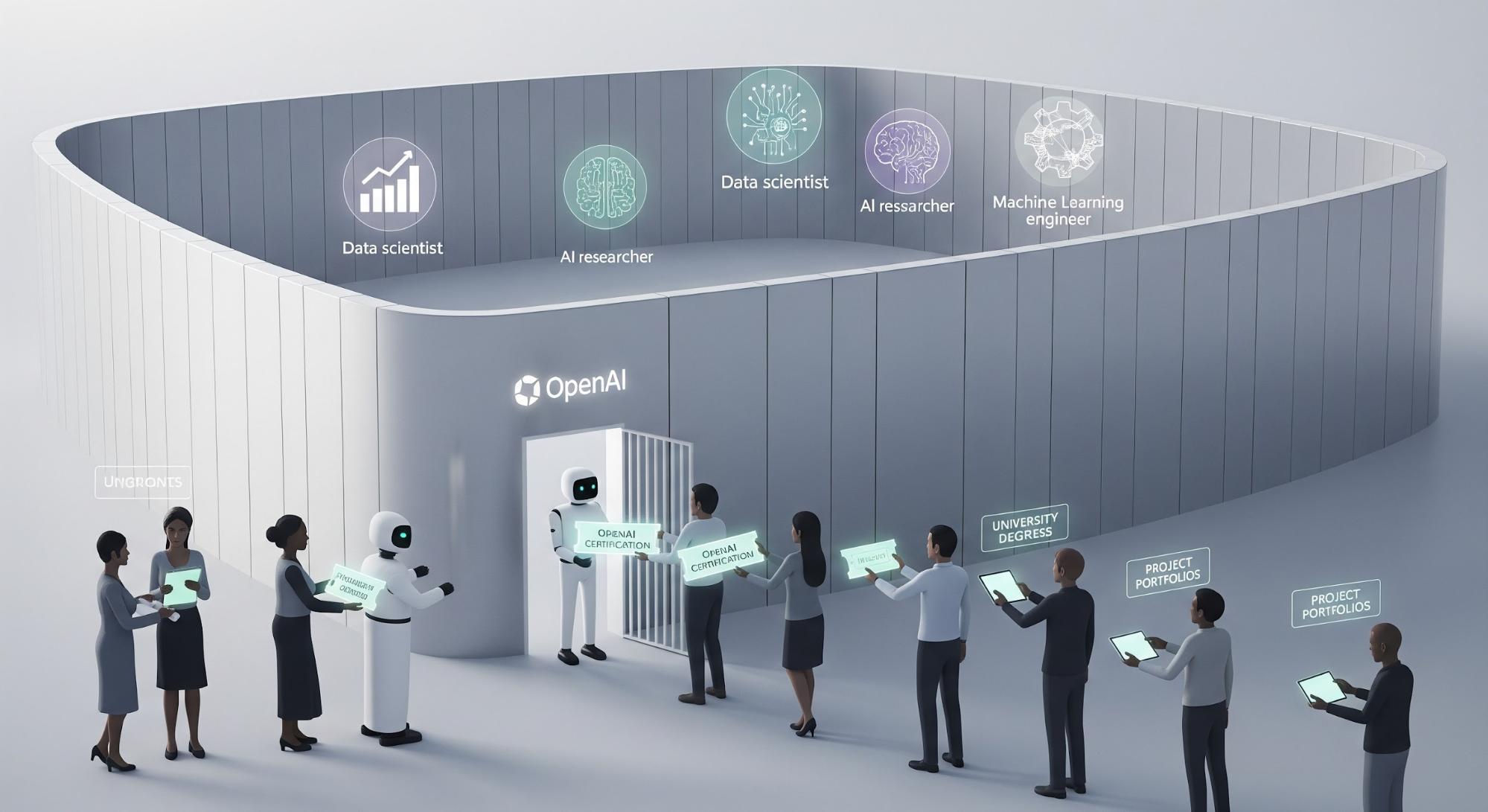
What is the main business risk of OpenAI’s strategy? The most significant danger is “credential capture”.
This is a scenario where the OpenAI Jobs Platform’s algorithm is not objective. What if it is designed to systematically favor candidates who hold OpenAI’s own certifications?
This immediately sidelines equally or more qualified candidates who earned their skills through other means, such as a university program, a competitor’s certification, or, most importantly, years of on-the-job experience.
Critical Insight: This platform is marketed as a skills-based meritocracy. However, it risks creating a new, algorithmically enforced “closed garden”. “Merit” could be narrowly redefined as “possessing an OpenAI-issued credential,” forcing the entire market to align with its standards and creating a durable, anti-competitive form of vendor lock-in.
Risk 2: Scaled Algorithmic Bias
Can the OpenAI hiring platform be biased? Yes. Based on existing research, this is a near-certainty without extreme intervention.
AI models are trained on historical data, which is a mirror of existing societal and organizational biases related to gender, race, age, and ability. These models don’t just learn these biases; they often amplify them.
- The Evidence: This is not hypothetical. Independent research has already demonstrated racial and gender bias in GPT models when they are tasked with ranking equally-qualified resumes.
- The “Black Box” Problem: Compounding this is the inherent lack of transparency in complex AI. If a qualified candidate is unfairly rejected by the algorithm, there may be no clear, auditable trail to explain why. This makes it nearly impossible for individuals to seek recourse or for organizations to prove their hiring practices are fair.
Critical Insight: This opacity creates a critical problem I call “accountability diffusion”. If a biased hiring decision occurs, who is legally liable? Is it the employer who chose to use the tool, or is it OpenAI, which provided the opaque algorithm? This legal ambiguity is a massive, unaddressed risk for any company adopting these tools.
Risk 3: The “Missing First Rung” of the Career Ladder
What is the broader labor market impact? The very need for this strategy stems from the fact that OpenAI’s technology is automating the routine cognitive tasks that make up the bulk of junior and entry-level work.
This erosion “removes the first rung” of the career ladder. It makes it incredibly difficult for new graduates and career-changers to gain the foundational experience necessary for advancement.
OpenAI’s certification is being proposed as the “new first rung”. But this doesn’t solve the underlying problem: how do you build practical judgment and professional wisdom? These skills are not learned in a course; they are acquired through mentorship and experience.
Critical Insight: The automation of simple tasks means companies can no longer rely on passive, on-the-job learning. In my view, this necessitates a structural shift toward proactive talent development, such as formal apprenticeships and intensive mentorship programs, to bridge the gap.
An Investor’s Framework: How to Navigate the New AI Talent Ecosystem
OpenAI is not just entering the HR tech market; it is strategically positioned to reshape it. Its success will depend on employer adoption of its certs and its ability to mitigate the profound ethical risks.
Based on my analysis, organizations and investors cannot afford to be passive. To navigate this new landscape, I recommend a 4-step framework.
1. Diversify Your Signals (The “Portfolio of Proof”)
To avoid “credential capture” and vendor lock-in, you must formally adopt a “portfolio of proof” approach to hiring. Treat an OpenAI certification as one valuable signal among many. It should be weighed alongside other vendor credentials (Google, Microsoft, AWS), university degrees, internal skills assessments, and—most importantly—portfolio-based evidence of real-world projects and accomplishments.
2. Demand Algorithmic Transparency
Before you adopt any AI-powered hiring platform, you must demand transparency. Ask vendors to provide clear, understandable explanations of:
- How their matching algorithms function.
- What data they were trained on.
- What specific, verifiable steps have been taken to audit and mitigate bias.
Your contracts should stipulate a right to human review and a clear process for appealing algorithmic decisions.
3. Re-architect Internal Talent Development
Acknowledge that the “first rung” of the career ladder is gone. You must now proactively build your own talent pipeline. This means investing in structured apprenticeship, mentorship, and job rotation programs. The focus must shift from passive learning to active, intentional skill-building by pairing junior employees with senior experts on complex, AI-assisted projects.
4. Measure Task-Level ROI, Not Hype
Ground your AI implementation in business reality, not hype. Focus on deploying AI to augment specific, measurable tasks—like reducing time on reports or improving analysis accuracy—rather than pursuing vague transformation goals or premature headcount reductions. Crucially, you must track employee wellbeing and cognitive load in parallel with productivity metrics to ensure the technology is enhancing, not degrading, the quality of work.
The future of work isn’t about replacing humans; it’s about augmenting them. But as investors and leaders, it’s our responsibility to ensure the platforms we adopt create genuine opportunity, not just new, opaque barriers to entry.