
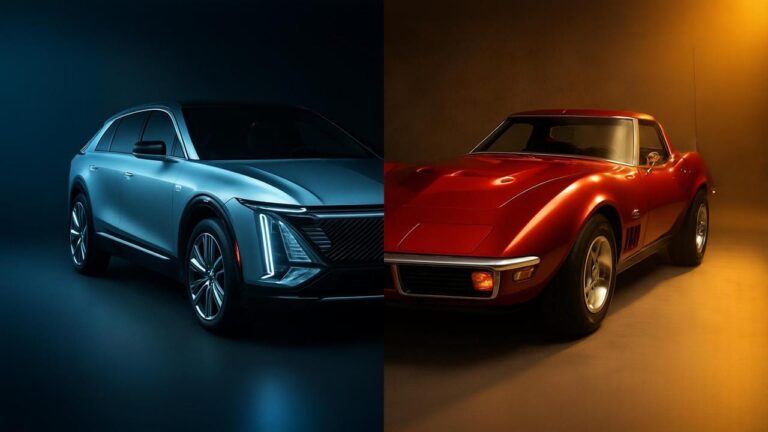
Here Are 4 Shocking Takeaways From Its Latest Report.
For the past several years, the dominant narrative in the automotive industry has been one of a relentless, all-or-nothing race toward an electric future. Automakers have been locked in a seemingly ideological battle to prove their commitment to battery-powered vehicles, often prioritizing future promises over present-day realities. The prevailing wisdom has been clear: go all-in on EVs or get left behind.
General Motors’ latest earnings report, however, reveals a dramatically different and more pragmatic strategy. While the headlines focused on substantial profits and raised guidance, the real story lies beneath the surface. A closer look at the company’s Q3 2025 earnings report and forward-looking statements reveals a series of counterintuitive decisions that directly challenge the prevailing EV hype. GM is making a hard pivot from pure ideology to profitable realism, with significant implications for the industry.
——————————————————————————–
1. They’re Slamming the Brakes on the EV Transition (For Now)
GM’s first move wasn’t a subtle course correction; it was a public declaration that the industry’s EV-or-bust narrative is broken. In a stunning admission, CEO Mary Barra stated that the company has concluded that “near-term EV adoption will be much lower than planned.” This isn’t just talk; the company is backing it up with decisive and costly actions to realign its strategy with market realities.
The evidence of this slowdown is clear and substantial:
- BrightDrop Discontinued: GM is discontinuing production of its BrightDrop electric commercial van and idling the Canadian Automotive Manufacturing Inc. (CAMI) facility where it was produced, citing slower-than-expected market growth.
- A $1.6 Billion Charge: The company recorded a special item charge of $1.6 billion in the third quarter. This includes “1.2 billion… for noncash impairments” related to the transition, and “$0.4 billion is for cash charges related to supplier contract cancellation costs.”
- Inventory Reduction: As Executive VP & CFO Paul Jacobson noted, the company actively managed EV inventory down by “almost 30% since the end of the second quarter.”
This strategic shift is not an abandonment of electric vehicles, but rather a pragmatic response to consumer demand and an evolving regulatory landscape. While GM is adjusting its short-term plans, it maintains its long-term vision.
EVs remain our North Star, so we will continue to invest in new battery chemistries like LMR, new form factors, and other architectural improvements to drive improved profitability.
— Mary Barra, Chairman & CEO
——————————————————————————–
2. They’re Investing Billions in the “Dinosaur” V8 Engine
While pumping the brakes on EVs, GM is executing an even more startling maneuver: flooring the accelerator on its highly profitable internal combustion engine (ICE) business. This isn’t just about meeting demand; it’s a calculated strategic pivot to onshore production, maximizing profits from proven winners, and mitigating crushing tariff costs.
Two significant investments underscore this commitment:
- GM is investing “close to $1 billion to build a new generation of advanced fuel-efficient V8 engines in New York.”
- The Orion Assembly plant, previously slated for EV production, will be transitioned back to ICE, where it will produce the “Cadillac Escalade and then add our next generation of full-size light-duty pickup trucks.”
The rationale is twofold. First, as Barra noted, “it is clear that ICE volumes will remain higher for longer.” Second —and more critically —it addresses the massive financial headwind posed by tariffs. By shifting production of its most valuable trucks and SUVs to the U.S., Barra confirmed the move is partly for “tariff mitigation,” turning a potential liability into a strategic advantage.
…anticipating that we’re going to be able to sell our internal combustion engine vehicles for longer… when Orion comes online, that’s going to allow us to maximize fully, really, what is a franchise for GM with full-size utilities.
— Mary Barra, Chairman & CEO
——————————————————————————–
3. They’re Quietly Becoming a High-Margin Software Company
Beneath the loud headlines about EVs and V8S, GM is executing a silent but powerful third strategy: building a massive, high-margin software and services business. This isn’t a future promise; it’s a rapidly scaling profit engine that is transforming the company’s financial DNA.
The scale of this business is impressive, as shown by the latest metrics:
- Revenue: The company has recognized nearly $2 billion in revenue so far this year from OnStar, Super Cruise, and other services.
- Deferred Revenue: This figure reached almost $5 billion at the end of Q3, a 14% increase from the previous quarter.
- Subscriber Growth: OnStar subscribers have surged 34% year over year to 11 million.
- Super Cruise Adoption: The number of Super Cruise customers has nearly doubled year over year to over 500,000.
The most impactful statistic, however, is the profitability. GM expects this division to operate with “gross margins of about 70%.” While rivals chase manufacturing scale, GM is building a parallel, high-margin annuity business that insulates it from the brutal cyclicality of auto sales.
——————————————————————————–
4. Despite the Chaos, Business is Booming
With a billion-dollar EV write-down and a strategic overhaul underway, you might expect GM’s financials to be under pressure. Instead, the core business is firing on all cylinders, delivering such strong results that it raised its full-year guidance despite significant headwinds. The performance is even more remarkable considering the company absorbed a $1.1 billion gross tariff impact in the third quarter alone.
Here is the updated guidance for the full 2025 calendar year:
- EBIT-adjusted: Raised to $12 billion – $13 billion.
- EPS-diluted-adjusted: Raised to $9.75 – $10.50 per share.
- Adjusted automotive free cash flow: Raised to $10 billion – $11 billion.
This financial strength is built on a solid market position, with GM achieving its “highest third-quarter market share since 2017” in the U.S. The raised guidance is a sign of confidence, driven by strong execution and an improved tariff outlook. The company is using this strength to reward shareholders, repurchasing “$1.5 billion of stock in the quarter,” which has reduced the total share count by 15% year-over-year.
GM is stronger and more resilient than ever.
— Paul Jacobson, Executive VP & CFO
——————————————————————————–
Conclusion
The key takeaways from General Motors’ latest report reveal a calculated exploitation of its legacy strengths to fund a more patient, profitable, and ultimately sustainable transition to EVs. By slowing its EV rollout, reinvesting in its tariff-busting ICE cash cows, and quietly growing a high-margin software business, GM is directly challenging the high-burn, growth-at-all-costs model of its rivals.
This strategic pivot raises a critical question for the entire industry. In a volatile and uncertain auto market, is the most resilient strategy the one that chases an electric-only future at all costs, or the one that focuses on building a disciplined, diversified, and highly profitable business today?