
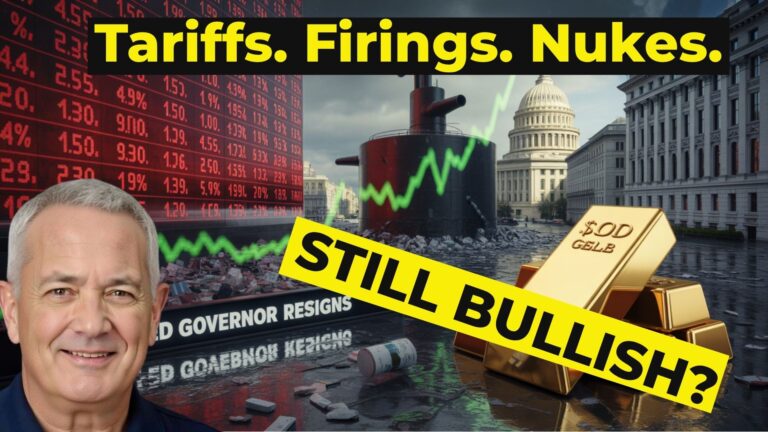
Stock Market Week Analysis: Tariffs, Jobs Data Shake Confidence as Fed Faces Leadership Shakeup
Introduction
The U.S. stock market faced a turbulent week ending August 2, 2025, dramatically shifting from a period of sustained highs to significant downturns. Economic uncertainty escalated amid disappointing employment data, significant tariff impositions, and a major shakeup within key government financial institutions, notably the Federal Reserve and the Bureau of Labor Statistics (BLS).
Weak Labor Market Fuels Economic Concerns
The labor market demonstrated notable weakness as July payroll figures disappointed, coming in at just 73,000 new jobs compared to an estimated 104,000. More concerning, massive downward revisions totaling 258,000 for the prior two months amplified worries, marking one of the most significant revisions in decades. The unemployment rate rose to 4.2%, and labor force participation dipped to a concerning low of 62.2%—the lowest since November 2022. These developments imply that without declining participation, the unemployment rate could effectively be around 4.9%.
Layoffs also surged, as the July Challenger jobs report indicated a 29% monthly increase and a staggering 140% rise year-over-year, driven by factors including tariffs and the ongoing integration of artificial intelligence.
New Tariffs Escalate Trade Tensions
President Trump’s aggressive tariff policies intensified during the week. New tariffs imposed include a 35% rate on Canadian imports (up from 25%), a 39% rate on Swiss goods, and a broad reciprocal tariff rate minimum of 10%. This escalation drives average U.S. tariff rates to approximately 18.3%, marking the highest since 1934.
Major corporations responded with alarm:
-Ford anticipates tariffs as a $2 billion headwind.
-Apple projects $1.1 billion in additional tariff costs.
-Procter & Gamble expects around $1 billion in higher tariff-related expenses.
-Hershey announced price hikes due to anticipated tariff expenses ranging from $170-$180 million.
Such tariffs threaten corporate profitability, supply chains, and consumer purchasing power, with potential inflationary impacts throughout the economy.
Leadership Shakeup at the Federal Reserve and BLS
Amid rising economic anxieties, significant shifts in economic leadership heightened uncertainty. President Trump, dissatisfied with recent labor statistics, directed the firing of the BLS commissioner. Simultaneously, Federal Reserve Governor Krueger abruptly resigned, creating a power vacuum within the Fed.
The administration’s moves signal potential political pressures shaping economic policy. The market increasingly anticipates a more dovish Federal Reserve stance, with an 88% probability now priced in for two interest rate cuts this year, including an 80% likelihood of a rate reduction in September.
Economic Growth and Inflation Picture Mixed
While Q2 GDP figures showed robust growth at 3%, the average first-half growth remains muted at 1.25%, notably slower than recent trends. Inflation indicators remain complex, influenced by tariff impacts and shifting consumer behavior. Core PCE inflation hit 2.8% year-over-year, suggesting persistent underlying pressures complicating the Federal Reserve’s monetary policy decisions.
Sector and Stock Divergences Highlight Market Volatility
Despite broader market turbulence, significant disparities emerged among sectors:
–Artificial Intelligence & Tech: Companies like Microsoft and Meta delivered impressive results, benefiting from robust AI investments. Apple, however, showed vulnerability due to tariff concerns.
–Consumer and Materials: Suffered steep declines, significantly impacted by rising costs and cautious consumer spending.
–Cryptocurrency: Stocks plunged as Bitcoin prices dropped, highlighted by Coinbase’s nearly 17% decline.
Conversely, Renewable Energy displayed resilience, exemplified by First Solar’s 5.3% gain driven by tariffinduced competitive advantages.
Geopolitical Risks Intensify Market Uncertainty
Global tensions remain pronounced. Ongoing conflicts in the Middle East and Ukraine, alongside escalating U.S.-China strategic competition, add layers of risk and unpredictability. Cybersecurity threats have intensified, further complicating the risk landscape and investor outlook.
Fed Policy in Focus Amid Leadership Changes
With the Federal Reserve experiencing internal disruptions and facing political pressures, the path of monetary policy remains uncertain. Market participants are closely monitoring the Fed’s response to a rapidly deteriorating labor market juxtaposed with persistent inflation. These dynamics create a delicate balance for incoming leadership, tasked with navigating potentially contradictory signals to stabilize economic expectations.
Investment Strategies: Navigating Volatility
Given current uncertainties, investment strategies must emphasize quality, diversification, and resilience. Companies demonstrating solid fundamentals and structural growth themes, particularly in technology and renewable energy, continue to attract investor favor despite market turbulence.
Investors should also brace for volatility and consider tactical opportunities, especially in sectors unfairly impacted by transient factors. Market disruptions, such as tariff-induced volatility, may provide entry points into undervalued assets poised for recovery.
Weekly and Year-to-Date Stock Market Performance
The stock market endured significant setbacks this past week, with key indices reflecting broad investor anxiety:
–S&P 500 closed at 6,339.39, down 2.4% for the week, its largest weekly drop since mid-May.
–Dow Jones Industrial Average finished at 44,130.98, declining by 3.1%, marking its most significant decline in four months.
–Nasdaq Composite ended the week at 21,122.45, sliding 2.2%, its worst weekly performance since mid-May.
–Russell 2000 significantly underperformed, falling 4.17%, indicating higher vulnerability among smaller, domestically-focused companies.
Year-to-date performances also show significant divergences:
–Nvidia (NVDA): +32.5%
–Meta Platforms (META): +32.1%
–Microsoft (MSFT): +26.6%
–Amazon (AMZN): +6.7%
–Alphabet (GOOGL): +1.4%
–Apple (AAPL): -17.1%
–Tesla (TSLA): -23.7
Conclusion
The week ending August 2, 2025, underscored significant vulnerabilities within the U.S. economy, intensified by policy-driven uncertainties and dramatic leadership shakeups at the Federal Reserve and the BLS. While near-term volatility is likely to persist, long-term investors who strategically navigate these turbulent waters may uncover compelling investment opportunities. Vigilance and adaptability remain crucial as markets contend with ongoing geopolitical risks, evolving trade policies, and shifting economic fundamentals.